Tầng 8, Tòa nhà Sannam, số 78 Phố Duy Tân, P.Dịch Vọng Hậu, Q. Cầu Giấy, Tp. Hà Nội, Việt Nam

Advisory
Direct: 0904565626

Products of Tri Viet

Energy Management System (EMS)

Energy costs are increasingly accounting for a significant portion of building and business operations, making control and optimization more essential than ever. The Energy Management System (EMS) was developed as a solution to monitor, analyze, and optimize overall energy consumption in real time, thereby supporting efficient operations and long-term cost savings.

Overview of Energy Management System (EMS)

An Energy Management System (EMS) is a solution that helps monitor, analyze, and optimize energy consumption in buildings. This system collects data from electricity, water, HVAC, lighting, and other energy-consuming equipment, then generates reports and optimization recommendations for operations.

Unlike conventional monitoring systems, EMS focuses on analyzing energy performance in real time to reduce operational costs effectively.

Structure of an Energy Management System

An EMS in buildings is typically designed in a multi-layer architecture to ensure accurate and continuous data collection, processing, and monitoring:

- Measurement Devices (Energy Meters / Sensors):

These include electricity meters, water sensors, temperature sensors, gas sensors, etc., responsible for recording real-time energy consumption data at each area or device.

- Data Acquisition Devices (Data Logger / Controller / Gateway):

Act as intermediaries, collecting data from measurement devices and transmitting it to the central system. These devices often support communication protocols such as Modbus RTU/TCP or BACnet.

- EMS Server:

The central storage and processing unit for all energy data. The server analyzes information by area, time, and equipment to support monitoring and operational optimization.

- EMS Management Software:

Provides a user interface displaying data in charts, reports, alerts, and dashboards. Users can monitor energy consumption and make timely adjustments.

- Communication Network:

Connects all devices via LAN, TCP/IP, or cloud IoT platforms, ensuring continuous and stable data transmission.

With this multi-layer structure, EMS can accurately monitor, analyze, and optimize energy usage, helping improve operational efficiency and significantly reduce costs.

Working Principle of Building Energy Management System

The EMS operates based on a cycle of data collection – transmission – analysis – optimization:

1. Sensors and meters record real-time energy consumption data

2. Data is transmitted to the central controller

3. EMS software processes and analyzes consumption by area and equipment

4. The system displays reports and alerts when thresholds are exceeded

5. It suggests or automatically adjusts operations to optimize energy use

This mechanism allows EMS to effectively control costs and improve operational performance.

Key Advantages of Energy Management System (EMS)

Implementing an EMS helps buildings and businesses efficiently control overall energy consumption, thereby optimizing operations and significantly reducing costs:

- Real-time energy monitoring: Track electricity, water, and HVAC consumption in detail by area or device, ensuring precise control.

- Operational cost optimization: Identify energy waste points and adjust usage to reduce costs while maintaining performance.

- Intelligent data analytics: EMS aggregates data and generates visual reports, supporting data-driven decision-making.

- Abnormal alerts: Automatically detects unusual consumption or equipment anomalies, enabling timely intervention.

- Long-term management support: Stores historical data for trend analysis and long-term energy optimization strategies.

Thanks to these advantages, EMS has become a crucial solution in modern buildings and smart operation models.

Applications of EMS in Various Projects

EMS is widely implemented across different types of buildings to monitor and optimize energy consumption based on specific usage needs:

- Office buildings: Manage electricity, HVAC systems, and lighting to ensure a stable and energy-efficient working environment.

- Residential buildings and urban areas: Monitor and optimize operational costs for shared utilities such as elevators, public lighting, and technical systems.

- Factories and industrial zones: Track energy consumption in production processes, identify high-consumption areas, and improve operational efficiency.

- Shopping malls and hotels: Control energy usage by operational zones, ensuring stability and reducing peak-time electricity costs.

With its flexibility and scalability, EMS is suitable for most modern building models, from residential to industrial applications.

Frequently Asked Questions about EMS

After understanding the structure and applications, here are some common questions to clarify EMS in real-world operations:

1. Is EMS necessary for small buildings?
Yes, EMS helps optimize costs even for small-scale projects.

2. Can EMS automatically control devices?
Yes, depending on configuration, EMS can integrate with automatic control systems.

3. What is the difference between EMS and BMS?
BMS manages overall building systems, while EMS focuses specifically on energy optimization.

4. Does EMS store data long-term?
Yes, data is stored for long-term analysis and reporting, supporting energy performance evaluation.

Implementing an Energy Management System (EMS) not only helps control energy consumption but also optimizes operational costs and improves long-term efficiency. With its intelligent monitoring, analysis, and alert capabilities, EMS is becoming an essential solution for buildings and businesses aiming for sustainable and energy-efficient operations.
PHẦN MỀM QUẢN LÝ NĂNG LƯỢNG ĐIỆN NƯỚC, GAS IN HÓA ĐƠN

PHẦN MỀM QUẢN LÝ NĂNG LƯỢNG ĐIỆN NƯỚC, GAS IN HÓA ĐƠN

Energy Management System (EMS)
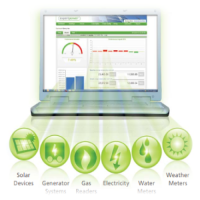
ExpertPower™ comprehensive energy management software solution provides actionable insight and easy consumption visibility. It fully supports Billing, Demand response, Power quality analysis and Generator control. ExpertPower™ is available either as an online service (SaaS – Software as a Service) or as a standalone package (Pro).
ExpertPower™ fast and intuitive online web interface makes it easy to control comprehensive electrical data. It reduces the total cost of ownership (TCO) by eliminating the need for training or using special hardware or software. Its scalability allows starting with a small installation and expanding as you grow your business. complete solution includes our wide range of power analyzers combined with ExpertPower™ software, providing all the information and analytics necessary to improve your energy system efficiency, reliability and profitability

ĐỒNG HỒ ĐO ĐẾM ĐIỆN NĂNG 1 PHA

ĐỒNG HỒ ĐO ĐẾM ĐIỆN NĂNG 1 PHA

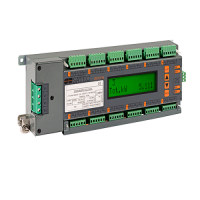
Branch Feeder Monitor™ (BFM) products provide energy management for multi-point power solutions. The BFM product line includes the well established BFM136,  
Ideal for both new and retrofit projects, the BFMs automatically provide metering, demand and energy readings, logging and multi-tariff (TOU) data. The BFM-II monitors up to 18 three-phase circuits, 54 single-phase circuits, or any combination of single or three-phase circuits, 
the BFM-II perfect for multi-tenant facilities such as residential projects, office buildings and shopping malls as well as substation automation and industrial control. Its modular design offers a selection of 18, 24, 30, 36, 42 or 54 channels to fit any requirement 
Model Number : 
BFM136

ĐỒNG HỒ ĐO ĐẾM ĐIỆN NĂNG 3 PHA 3 GIÁ

ĐỒNG HỒ ĐO ĐẾM ĐIỆN NĂNG 3 PHA 3 GIÁ

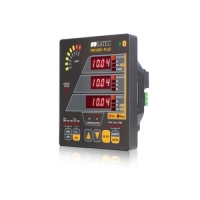
PM130 PLUS 
Extra bright 7-segment LEDs, 3 lines of 4-5 digits plus unique bar graph loading indicator
PM135 3.5” backlit LCD plus unique bar graph loading indicator
The PM130/135 are multi-functional 3-phase power meters with basic revenue metering, power quality and harmonics analysis. The PM130/135 are widely integrated in panel boards and SCADA systems, with integral RS-485 communication port and a wide range of protocols, such as Modbus, DNP 3.0 and IEC 60870. With the addition of the unique TOU module,
Model Number : 
PM130P, PM130E, PM130EH , PM135P, PM135E, PM135EH 

ĐO ĐẾM NƯỚC SINH HOẠT TR15 - TR20

ĐO ĐẾM NƯỚC SINH HOẠT TR15 - TR20

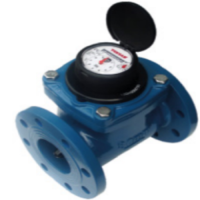
Multi-jet dry type 360°C rotatable cover
Display on 5 drums m³ and 4 pointers for litres
Optional check valve Magnetic field protection
Measuring range up to R80 Optional pulse, M-bus, Radio frequency output
Hermetically sealed register (IP68) Brass housing
Water temperature up to 90°C
DN15 to DN100
Model Number : 
TR15, TR20.

ĐO ĐẾM NƯỚC SINH HOẠT

ĐO ĐẾM NƯỚC SINH HOẠT

Single-jet dry type
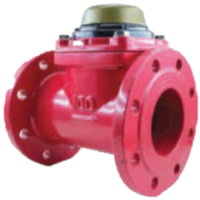
360°C rotatable register group, Display on 8 drums (5 for m³, 3 for litres), Optional check valve
Measuring range up to R160 , Hermetically sealed register (IP68), Brass housing, Water temperature up to 50°C, Internal M-bus module, Detection of direction of rotation
Optional leakage detection, Magnetic intervention alarm, Optional overloading alarm
Low battery alarm, MBUS EN13757-3 Baud Rate (300, 2400, 9600)DN25~DN600
DN15 to DN100
Model Number : 
GT15, GT20.

ĐO TẢI LẠNH BTU HEAT METER SERIES

ĐO TẢI LẠNH BTU HEAT METER SERIES

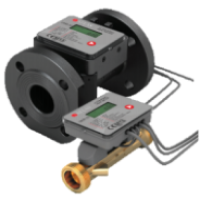
Temperature range 5…130°C. Nominal pressure: PN16 . Meter protection rating: IP65 
Energy units: Btu, kWh, MWh, Gcal, GJ *Optional Work with systems containing water 
Easy to read 8 digit display, with symbols indicating operation state of meter, operated by a single button .Some models have rotatable by 180° calculator with wall-mount possibility. 
Battery powered  (battery lifetime up to 10 years) Integrated pulse outputs for energy and volume. 
DN15~D3600
Model Number : 
UKM15, UKM20, UKM25, UKM32, UKM40, UKM50, UKM65, UKM80., UKM100, UKM125, UKM150, UKM200, UKM250, UKM300

KEF FLOWMETER SERIES – JOHNSON CONTROLS

KEF FLOWMETER SERIES – JOHNSON CONTROLS

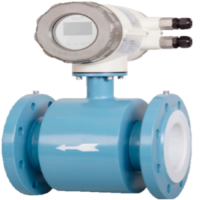
Johnson Controls KEF series Inline and Insertion Electromagnetic Flow Meters measure flow rate or flow speed of electrically conductive liquids in wide application of chiller plant,  air side equipment, raw water metering, water distribution, and sea water etc
Each flow meter is calibrated and programmed before shipment. The product is with LCD display for local operation or remote operation through communicating building automation systems
DN25~DN600
Model Number : 
KEF025F, KEF032F, KEF100F, KEF150F, KEF200F, KEF250F, KEF300F, KEF350F
KEF250I, KEF300I, KEF350I, KEF400I, KEF450I, KEF500I, KEF600I

KHN BTU METER / KEN FLOWMETER SERIES – JOHNSON CONTROLS

KHN BTU METER / KEN FLOWMETER SERIES – JOHNSON CONTROLS

Johnson Controls KEN series Inline Electromagnetic Flow Meters measure flow rate or flow speed of electrically conductive liquids in wide application of chiller plant, air side equipment, raw water metering, water distribution, and sea water etc.
Johnson Controls KHN series Inline Electromagnetic BTU Meters are used to measure the cooling or heating capacity in wide application of chiller plant, air side equipment, and heat transfer station etc
DN25~DN600
Model Number : 
KEN025F, KEN032F, KEN100F, KEN150F, KEN200F, KEN250F, KEN300F, KEN350F
KHN025F, KHN032F, KHN100F, KHN150F, KHN200F, KHN250F, KHN300F, KHN350F.
 

Zalo