Tầng 8, Tòa nhà Sannam, số 78 Phố Duy Tân, P.Dịch Vọng Hậu, Q. Cầu Giấy, Tp. Hà Nội, Việt Nam

Advisory
Direct: 0904565626
Advisory
Direct: 0904565626
Controlling flow and temperature in a central air-conditioning system plays a crucial role in overall operational efficiency. HVAC control valves are used as a solution to regulate water or air flow according to actual demand, thereby optimizing cooling performance and saving energy for the entire system.
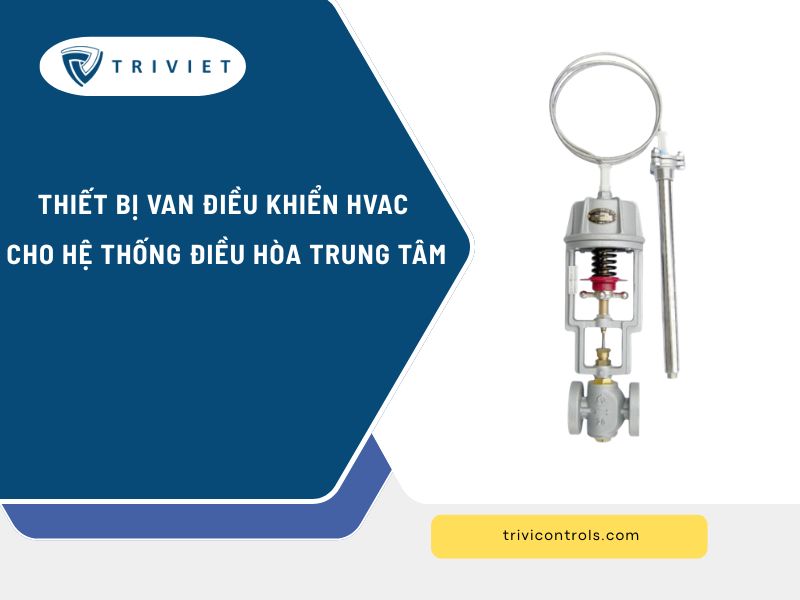
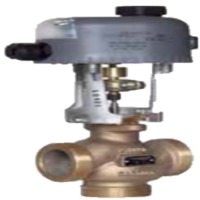
An HVAC control valve is a device used to regulate the flow of water or air in air-conditioning systems, especially in Chiller, AHU, and FCU systems. The valve operates based on control signals from controllers (DDC/BMS), helping maintain stable temperature and pressure within the system.
Thanks to its precise control capability, HVAC control valves contribute to improving system efficiency and ensuring a stable operating environment.
Depending on system configuration, HVAC control valves are generally classified by function and control mechanism as follows:
There are two main types:
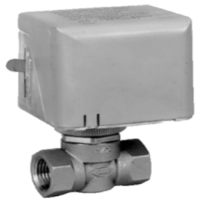
- 2-way valve:Regulates water flow according to actual cooling load, commonly used in FCU and AHU systems. This is the most common type of HVAC control valve in energy-optimized systems.
- 3-way valve:Allows mixing or diverting flow, helping maintain constant flow in the system. It is typically used in systems requiring stable water circulation.
There are three types:
ON/OFF control valve:Fully opens or closes based on control signals, suitable for simple systems.
Modulating control valve:Adjusts flow proportionally (0–10V, 4–20mA), enabling precise temperature control and improved HVAC system efficiency.
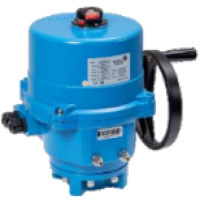
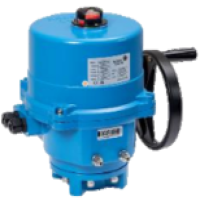
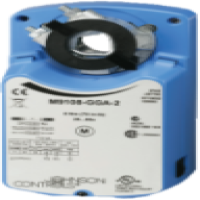
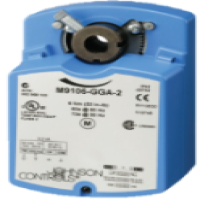
Motorized valve:Uses a motor for operation and receives signals from BMS/DDC systems. It can function as either ON/OFF or modulating depending on configuration.
.jpg)
To ensure efficient operation and precise regulation, HVAC control valves must be installed at appropriate positions in central air-conditioning systems:
At FCU and AHU (heat exchange coils):
The most common installation point, where the HVAC control valve regulates chilled water flow into the coil to control room temperature based on demand.
At Chiller system (supply and return loops):
Installed on supply or return pipelines to control water flow, ensuring stable chiller operation and preventing overload.
On main and branch pipelines:
Used to distribute and balance water flow across different zones, ensuring uniform and efficient system operation.
At bypass lines:
Some systems use HVAC control valves on bypass lines to maintain minimum flow, ensuring stable pump and chiller operation under low load conditions.
At independent control zones:
Installed in individual zones to control temperature separately, improving operational efficiency and energy savings.
Proper valve placement ensures HVAC control valves operate at maximum efficiency, maintaining a stable, flexible, and optimized air-conditioning system under all load conditions.
.jpg)
Applying HVAC control valves in central air-conditioning systems provides several important benefits, especially in optimizing performance and energy savings:
- Optimized system performance: HVAC control valves precisely regulate chilled water or air flow based on actual load, ensuring optimal system operation without overloading or underloading.
- Energy efficiency: By adjusting flow dynamically, unnecessary operation of chillers, pumps, and fans is reduced, significantly lowering energy consumption.
- Stable temperature and indoor comfort: HVAC control valves help maintain consistent temperature across different zones, minimizing fluctuations and improving user comfort.
- Extended equipment lifespan:Proper flow control reduces stress on chillers, pumps, and related equipment, extending overall system durability.
- Enhanced automation capability:When integrated with BMS or DDC systems, HVAC control valves enable fully automated operation based on predefined control scenarios, reducing manual intervention.
.jpg)
How does an HVAC control valve work?
It receives signals from a controller and adjusts water or air flow accordingly.
Should I choose a 2-way or 3-way valve?
It depends on system design; 2-way valves are ideal for energy savings, while 3-way valves are used for maintaining constant flow.
HVAC control valves are essential components for regulating flow, stabilizing temperature, and optimizing performance in central air-conditioning systems. Proper selection and installation help improve operational efficiency, save energy, and ensure long-term system reliability.
Contact Tri Viet Controls today for advice on suitable HVAC control valve solutions for your central air conditioning system, helping to optimize operational efficiency, save energy, and improve the stability of the entire building.












Please leave your information, we will contact you to complete the order!