Tầng 8, Tòa nhà Sannam, số 78 Phố Duy Tân, P.Dịch Vọng Hậu, Q. Cầu Giấy, Tp. Hà Nội, Việt Nam

Advisory
Direct: 0904565626
Advisory
Direct: 0904565626
The ability to monitor and control systems centrally has become a standard in modern building operations. BMS software is used as a central management platform, enabling real-time monitoring of equipment status, control of technical systems, and optimization of operational performance.
BMS software is the central control and monitoring platform within a Building Management System. It collects data from field devices such as HVAC, lighting, electrical systems, water systems, elevators, and more, displaying it through an intuitive interface for easy monitoring and control.
Unlike standalone control systems, BMS management software connects all building devices into a unified system, ensuring synchronized and more efficient operation.
For building technical systems to operate stably, BMS software plays an essential role:
- Centralized monitoring: All operational data is displayed on a single interface, making system control easier.
- Operational optimization: Supports automated control scenarios, reducing reliance on manual operations.
- Energy efficiency: Helps manage energy consumption and optimize HVAC and lighting performance.
- Alarm and fault management: Detects abnormalities and sends timely alerts for quick response.
.jpg)
A standard BMS software not only displays data but also acts as the central hub coordinating all building systems:
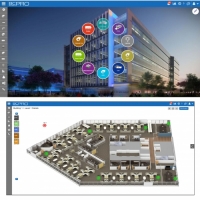
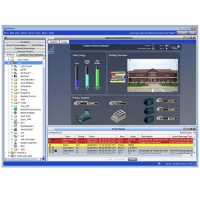
- Real-time system monitoring: Collects data from controllers (DDC/PLC) and sensors, displaying it in diagrams, charts, or dashboards for continuous and intuitive monitoring.
- Remote device control: Allows sending commands such as ON/OFF, setpoint adjustments, and scheduling via central computers or mobile devices.
- Data logging and analysis: Records operational data over time, supporting trend analysis, performance evaluation, and energy optimization.
- Alarm and fault management: Automatically detects issues (overheating, device faults, abnormal consumption), triggers alerts, logs events, and supports troubleshooting.
- System integration and synchronization: Connects with systems such as HVAC, Access Control, cameras, and fire alarms via protocols like BACnet and Modbus, enabling centralized management on a single platform.
.jpg)
BMS software is widely implemented in buildings with multiple technical systems requiring centralized monitoring and control, especially where continuous operation and energy efficiency are critical:
- Office buildings: Manages HVAC and lighting by zone, optimizing operational costs based on working hours.
- Hotels and resorts: Controls temperature and energy usage based on room occupancy, enhancing guest experience and saving energy.
- Shopping malls: Manages large loads from HVAC, lighting, and elevators, ensuring stable operation across different areas.
- Hospitals and schools: Maintains stable environments, especially in areas requiring strict temperature and air quality control.
- Factories and industrial zones: Monitors energy usage and technical systems, optimizing overall operational performance.
Thanks to its scalability and flexible integration, BMS software is suitable for medium to large-scale projects, especially those requiring centralized management and high automation.
Selecting BMS software should be based on compatibility with current systems and future expansion needs:
- Stability and security: Ensures 24/7 operation and protects operational data.
- Technical support: Availability of implementation and maintenance teams for long-term system stability.
- System compatibility: Supports protocols like BACnet and Modbus for integration with existing devices.
- User interface and usability: Should be intuitive and easy to operate to reduce human error.
- Scalability: Allows adding devices and integrating new systems without changing the core platform.
.jpg)
Tri Viet Controls provides BMS software and building management solutions with a synchronized approach, meeting monitoring, control, and optimization needs for various types of buildings.
- Project-based BMS solutions: Offers software configured according to project scale and operational requirements.
- Multi-system integration: Connects HVAC, cameras, Access Control, and other systems into a unified platform.
- Real-world implementation experience: Technical team with strong expertise in building automation ensures stable deployment.
- Long-term support: Provides consulting, installation, and maintenance services for continuous and efficient operation.
BMS software is a critical platform for centralized management and control of all building technical systems. Implementing the right BMS solution not only optimizes operations but also enhances control, improves energy efficiency, and ensures long-term system stability.







Please leave your information, we will contact you to complete the order!