Tầng 8, Tòa nhà Sannam, số 78 Phố Duy Tân, P.Dịch Vọng Hậu, Q. Cầu Giấy, Tp. Hà Nội, Việt Nam

Advisory
Direct: 0904565626
Advisory
Direct: 0904565626
In modern automation systems, sensors play the role of collecting data and converting physical quantities into signals used for monitoring, control, and operational optimization. From HVAC and BMS to industrial automation and smart homes, sensor devices are essential components that help systems operate more accurately, safely, and efficiently. The following article will help you understand the structure, operating principles, common sensor types, and their practical applications today.
A sensor is a device used to detect and measure physical or environmental quantities such as temperature, humidity, pressure, flow, light, gas, motion, or liquid level. After measurement, the sensor converts the value into an electrical signal and transmits it to a controller or monitoring system.
In BMS, HVAC, and industrial automation systems, sensors are considered the “eyes and ears” of the system, enabling controllers to recognize actual operating conditions and issue appropriate control commands. Sensor accuracy directly affects operational efficiency, energy consumption, and overall system safety.
.jpg)
To provide accurate measurements and stable operation in real environments, a sensor is typically composed of several functional blocks working together. Each block performs a specific task in the process of data acquisition and transmission.
The general principle of a sensor is to convert a physical quantity into an electrical signal that can be measured and processed.
The operating process consists of the following steps:
The physical quantity acts on the sensing element.
The sensing element changes an electrical property such as resistance, voltage, capacitance, inductance, or frequency.
The signal conditioning circuit converts this change into a stable electrical signal according to technical standards.
The signal is transmitted to a BMS controller, PLC, or monitoring system for display, storage, and control purposes.
For example, a PT100 temperature sensor is a platinum resistance element with a resistance of 100 Ω at 0°C. As temperature increases, its resistance increases almost linearly. The controller measures the resistance value and calculates the actual temperature for HVAC control or BMS display.
.jpg)
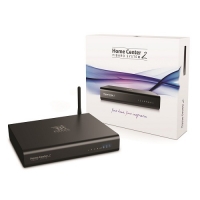
Tri Viet Controls supplies a range of FIBARO sensors designed for smart homes and automation systems. These devices use the Z-Wave protocol, providing stable communication with Home Center and compatible smart home platforms for security monitoring, safety management, and automation in residential and commercial buildings.
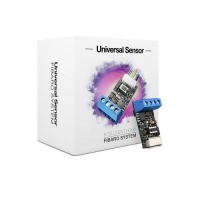
This device allows connection to dry contacts or external sensors to receive open/close status, alarm signals, or other digital inputs. It is commonly used to integrate roller shutters, switches, field sensors, and technical equipment into a smart home system.
The sensor detects water leakage or flooding on the floor and immediately sends an alarm when an incident occurs. It is suitable for kitchens, laundry rooms, technical rooms, under sinks, or near water pipes to minimize damage caused by leaks.
Using a magnetic contact, this sensor detects the open or closed status of doors, windows, cabinets, or shutters. In addition to security applications, it can automatically switch lights or air conditioners on and off and trigger smart home scenarios when the door status changes.
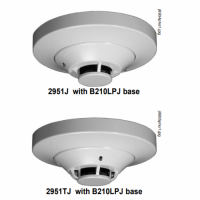
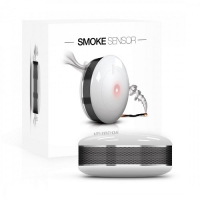
An optical smoke detector that identifies smoke at the early stage of a fire and activates a built-in siren while sending notifications to the control system. It enhances fire safety for apartments, villas, offices, and enclosed spaces.
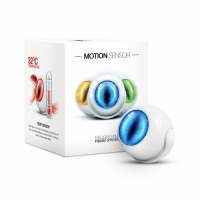
A PIR (Passive Infrared) sensor that detects human movement within the monitored area. It is commonly used for automatic lighting control, security alarm activation, and energy-saving applications when spaces are unoccupied.
Thanks to wireless connectivity, flexible configuration, and seamless integration with the FIBARO ecosystem, these sensor products help build smart home solutions that are safe, convenient, and easy to expand according to practical needs.
Thanks to continuous data collection and real-time communication capabilities, sensors are widely used in modern technical systems. Sensor data enables controllers to make accurate decisions, improve operational efficiency, and reduce energy costs.
Temperature, humidity, pressure, and flow sensors are installed in AHUs, FCUs, chillers, and piping systems to monitor operating conditions. The data helps the BMS adjust cooling capacity, fresh air supply, and chilled water flow according to actual load conditions, maintaining comfort while optimizing energy consumption.
In industrial environments, sensors monitor temperature, pressure, vibration, flow, and machine operating status. The system can detect abnormal conditions such as overheating, pressure loss, or excessive vibration, supporting predictive maintenance and reducing unplanned downtime.
Occupancy, motion, light, and air quality sensors are integrated with lighting, HVAC, shading, and security systems. When people are present, the system automatically activates equipment; when spaces are unoccupied, devices are switched off or set to energy-saving mode, improving comfort and operational efficiency.
Data centers require strict environmental control. Temperature, humidity, and differential pressure sensors are installed in racks, hot/cold aisles, and server rooms to provide continuous monitoring, early warning when thresholds are exceeded, and support cooling system control to protect servers and IT equipment.
>>> Learn more: Top 8 Essential Technical Sensors in HVAC and Building Systems
Level, pressure, and flow sensors are used in storage tanks, pumping stations, and pipelines to control pumps automatically, maintain stable pressure, and detect incidents such as leaks, water loss, or tank overflow. This improves system reliability and reduces water loss during operation.
Proper selection and installation of sensors provide many benefits for technical systems.
Thanks to these advantages, sensor devices are becoming indispensable components in smart buildings and modern automation systems.
Sensors form the foundation of every modern monitoring and automation system by providing accurate data for efficient equipment control, energy savings, and improved operational safety. Choosing the right sensor is critical to the stability and performance of BMS, HVAC, and industrial systems. If you need assistance selecting suitable sensors for your building or project, contact Tri Viet Controls for professional consultation and an optimized solution.








Please leave your information, we will contact you to complete the order!