Tầng 8, Tòa nhà Sannam, số 78 Phố Duy Tân, P.Dịch Vọng Hậu, Q. Cầu Giấy, Tp. Hà Nội, Việt Nam

Advisory
Direct: 0904565626
Advisory
Direct: 0904565626
Smart hotel switches control lighting, curtains, and in-room devices. Learn how to position switches, integrate them with RCU systems, and choose the right solution.
Smart hotel switches are the direct interface between hotel guests and the room control system. In addition to switching lights on and off, they can control curtains, activate lighting scenarios, and send commands to the Room Control Unit (RCU). Depending on the configuration, switches may include functions such as Welcome, Goodnight, DND, or MUR. Selecting and positioning the right devices makes room controls more convenient for guests while supporting coordinated hotel operations.
In a smart hotel model, switches provide a direct interaction point between guests and the room control system. Instead of installing multiple separate switches for individual devices, hotels can use integrated control panels to make operation more convenient.
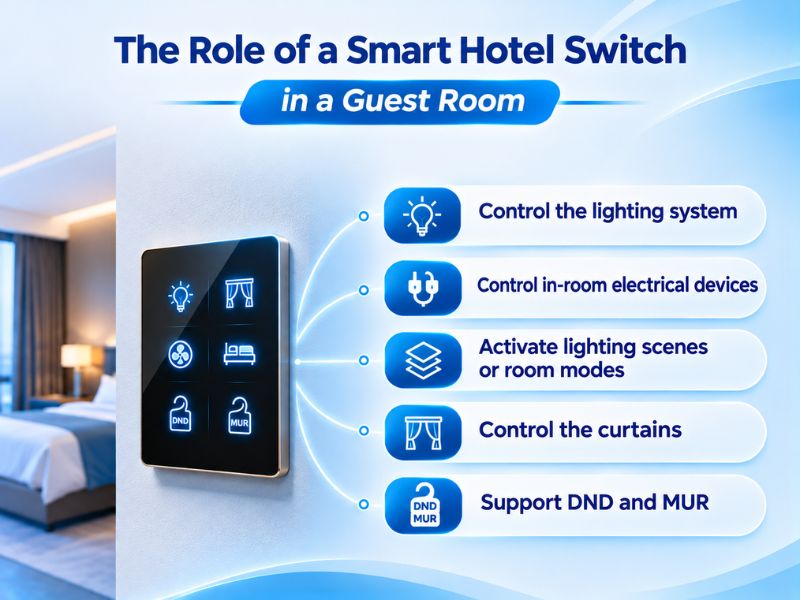
Smart hotel switches are typically designed to perform functions such as:
- Turning lighting systems on and off in different areas.
- Controlling selected electrical devices configured in the room.
- Sending commands to activate lighting scenarios or room modes.
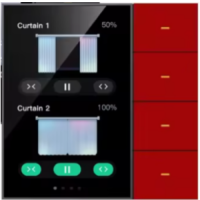
- Supporting curtain control when connected to a compatible system.
- Displaying or supporting room service functions such as DND (Do Not Disturb) and MUR (Make Up Room) on models equipped with these features.
Depending on the design and configuration, the number of buttons, control functions, and connectivity options may vary between switch models. Therefore, investors and project owners should clearly define usage requirements before selecting devices. This helps avoid installing too many buttons that guests rarely use or choosing switches that lack essential functions.
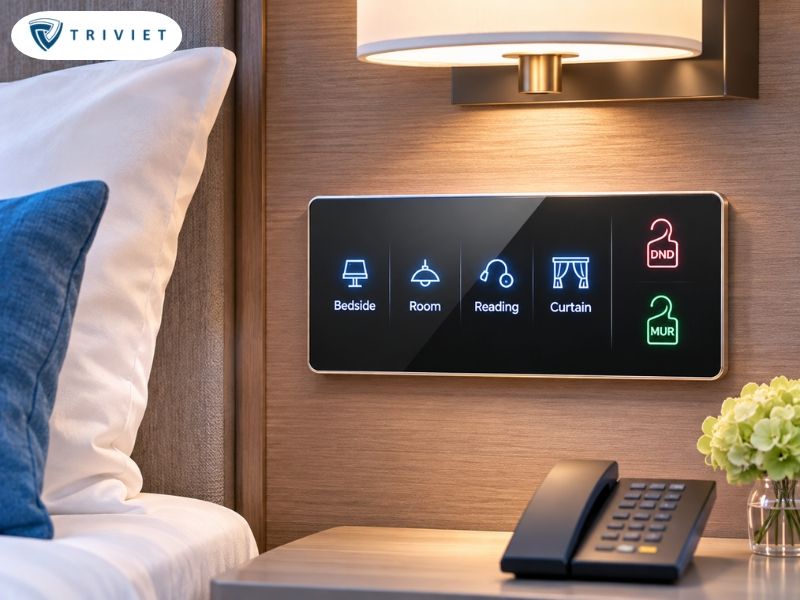
Installation locations directly affect the user experience. A smart hotel switch system should be arranged according to how guests move around the room, ensuring that they can easily find and operate the appropriate controls without repeated attempts.
The entrance is usually the first place where guests interact with the room control system when entering the room. Switches in this area can be arranged to control the main lights, hallway lights, or activate a welcome lighting mode if the system supports this function.
For hotel rooms that use key cards, the positions of the switches and card readers should be planned to make check-in and room access convenient. Functions related to power supply or automation when guests leave the room must be configured in coordination with the RCU and power management devices. It should not be assumed that the switch itself can perform the entire process.
The bedside is an important location because guests often need to control the lighting without getting out of bed. The control panel in this area can integrate buttons for room lights, bedside lights, reading lights, or a sleep mode, depending on the system design.
When arranging the controls, buttons should be grouped by function and clearly labeled. Frequently used controls should be placed where guests can reach them easily. This arrangement allows smart hotel switches to serve their intended purpose while reducing confusion during operation.
In the bathroom, switches are typically used to control lighting, mirror lights, or ventilation fans if these devices are designed to be connected to the system. Installation planning must take into account the high-humidity environment and electrical safety requirements for this area.
Devices should not be selected based solely on their appearance or the number of buttons. Project owners need to check the protection rating, installation location, and manufacturer's instructions to ensure that the equipment is suitable for the operating environment. For automatic functions such as sensor-controlled lighting or ventilation fans, it is necessary to identify which device detects the signal and which device executes the control command.
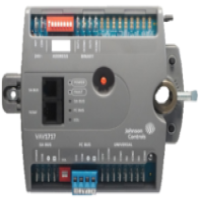
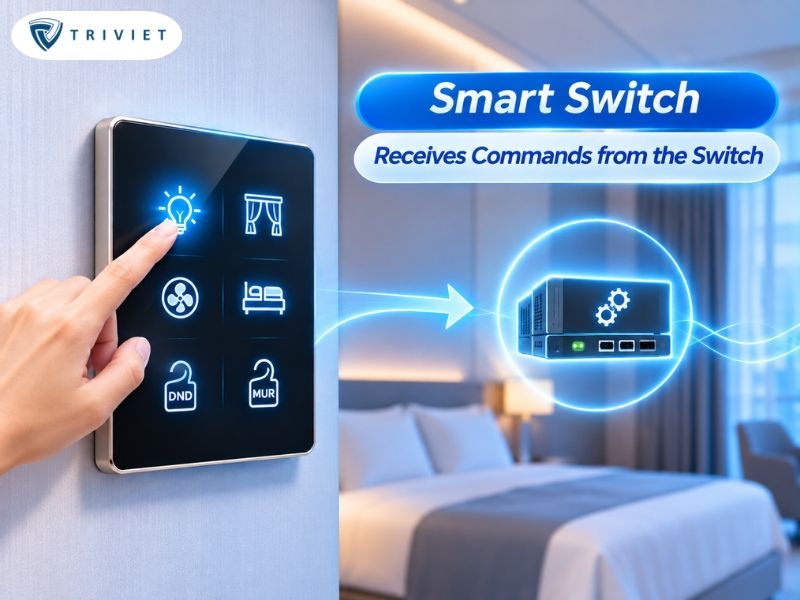
In a hotel room control system, switches and the RCU perform different roles. The switch acts as the interface through which guests send commands, while the RCU receives the signals, processes them according to its configuration, and controls the corresponding output devices. The specific coordination method depends on the hardware design and communication protocol used by each system.
In this setup, the Room Control Unit (RCU) receives signals from switches, processes commands, and controls output devices according to the configured program. The switch serves as the guest interface, while the RCU handles signal processing and coordinates the operation of devices throughout the room.
When a guest presses a button on the control panel, the signal is transmitted to the room controller through the connection method supported by the device. The RCU processes the command and activates the corresponding output, such as turning on a light or triggering a programmed scenario.
With this mechanism, a single button can be configured to perform an individual function or participate in a scenario involving multiple operations. However, the available functions depend on the number of inputs and outputs, configuration software, and compatibility between devices.
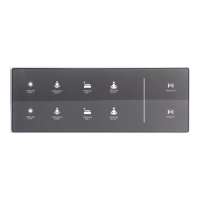
In addition to individual on/off operations, smart hotel switches can be configured to activate different room modes. For example, a "Welcome" button can be programmed to turn on selected lights when guests enter the room, while a "Goodnight" button can turn off a predefined group of lights before guests go to sleep.
These scenarios must be programmed in the controller and tested against actual operational requirements. Not every switch model comes with these buttons or functions by default; the device must support them and be configured accordingly.
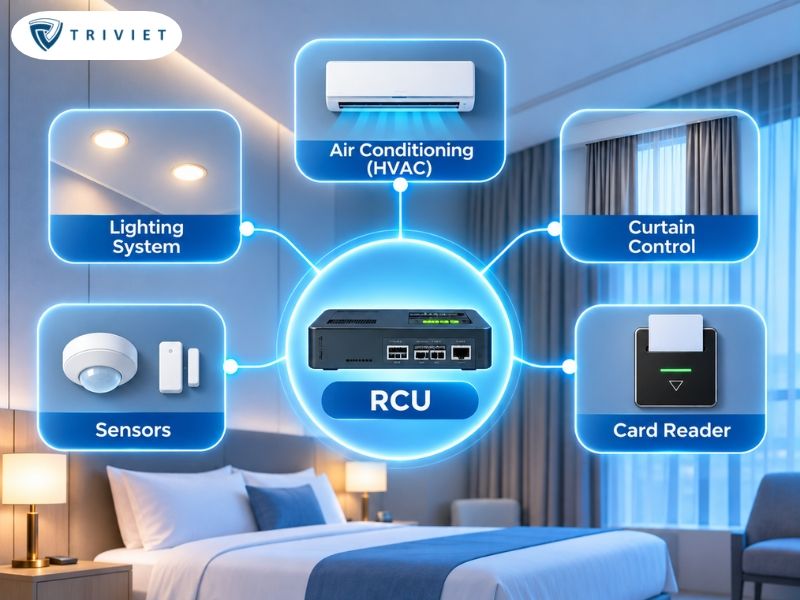
An RCU can connect to multiple in-room components, including lighting systems, air conditioning, curtains, sensors, and card readers. When these devices are designed to work together, commands from the switch can become part of the room's overall control process.
In addition to switches and the RCU, hotel room systems can use sensor devices to detect door status, movement, temperature, and other environmental conditions. Depending on the system configuration, sensor signals are sent to the controller to trigger the corresponding automation scenarios.
For example, guests can use the control panel to change lighting conditions or activate a room mode. Meanwhile, sensors and card readers can provide input signals that allow the system to execute predefined automation scenarios. This is how smart hotel switches coordinate with the RCU rather than operating as standalone devices.
To select suitable devices, project owners need to consider usage requirements, interior design, and the technical requirements of the control system. A switch with numerous functions is not necessarily the best choice if it is incompatible with the existing infrastructure.
First, create a list of the devices guests need to control at each location, including the entrance, bedside area, bathroom, and living area. Based on this list, determine the appropriate number of buttons, functions, and control groupings.
Avoid placing too many control buttons on a single panel if some functions are rarely used. A simple design with clear labels helps guests become familiar with the controls and reduces the risk of incorrect operation.
This is an important criterion when selecting smart hotel switches. Check the connection method, wiring diagram, power supply requirements, and compatibility between the switch and the RCU controller used in the project.
Do not assume that all devices labeled "smart" can connect to one another. If the switch and RCU use different communication methods or lack a suitable integration solution, the system may require an additional interface device or changes to the original design configuration.
Hotel switches are used frequently, so they need to meet requirements for durability, operating responsiveness, and ease of cleaning. The design, color, and faceplate material should also complement the hotel's interior style.
For areas exposed to moisture, check the protection specifications and the manufacturer's installation instructions. Project owners should also prioritize devices with clear technical documentation to facilitate installation, maintenance, and future replacement.
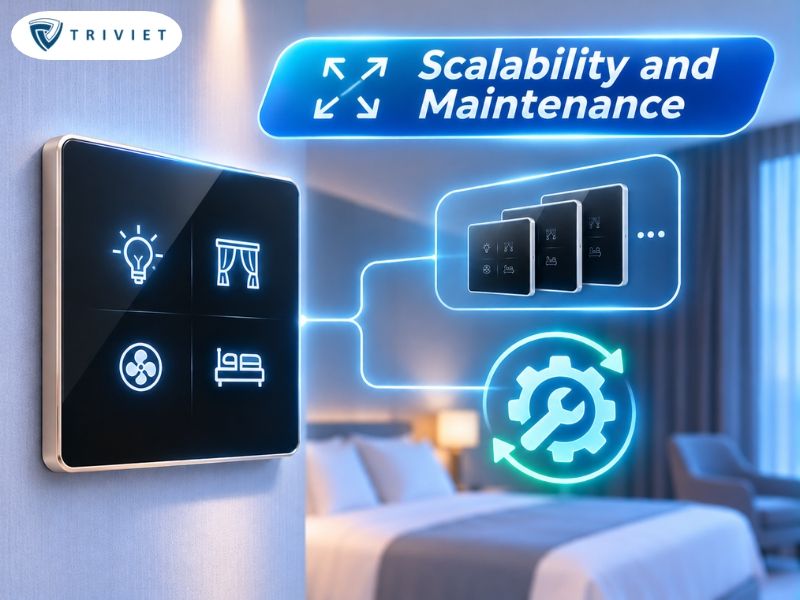
For hotels with multiple rooms or plans to upgrade their systems in stages, the scalability of the control solution should be considered. Devices with clearly documented connection methods and configuration procedures make it easier for technical teams to inspect the system and troubleshoot issues when necessary.
In addition, button numbering, wiring diagrams, and function lists should be standardized for each room type. This helps operations teams identify devices more quickly and avoid confusion during maintenance or replacement.
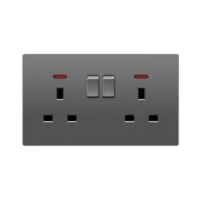
Tri Viet Controls provides a range of smart switches and smart sockets for residential buildings, hotels, and automation projects. When selecting devices for a hotel project, investors should check the product model, functions, connection method, and technical requirements against the RCU controller intended for use.
For projects that require multiple systems to operate together, switches should be considered as part of the overall smart hotel system. This approach allows project owners to evaluate how switches, RCUs, sensors, curtain controls, and room management devices work together from the design stage.
For projects that require coordinated control of multiple in-room devices, switch selection should be carried out alongside the RCU solution design process. Trí Việt Controls can provide consultation on equipment and integration options based on the project scale, number of rooms, operational requirements, and actual technical infrastructure.
Smart hotel switches are an important control interface in guest rooms, directly affecting guest convenience and the level of automation. To ensure effective system operation, project owners need to select devices that are compatible with the RCU, position them appropriately in each area, and define their functions during the design stage. Trí Việt Controls is ready to provide consultation on switch and control device solutions that meet the requirements of individual hotel projects







Please leave your information, we will contact you to complete the order!