Tầng 8, Tòa nhà Sannam, số 78 Phố Duy Tân, P.Dịch Vọng Hậu, Q. Cầu Giấy, Tp. Hà Nội, Việt Nam

Advisory
Direct: 0904565626
Advisory
Direct: 0904565626
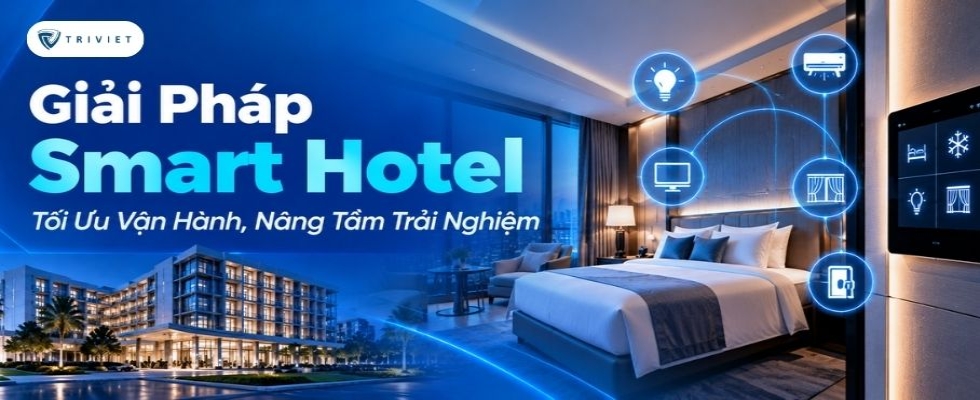
Smart Hotel Solutions help hotels optimize operations, manage in-room devices, save energy, and enhance the guest experience.
In the hotel industry, managing equipment, controlling energy costs, and maintaining service quality are essential operational requirements. Smart Hotel Solutions connect in-room devices with management systems, support the automation of hotel operations, and provide guests with a more convenient and comfortable stay.
Smart Hotel Solutions involve applying control and automation technologies to hotel operations. By connecting devices such as lighting, air conditioning, curtains, sensors, and central controllers, the system enables equipment to be managed according to predefined scenarios.
Instead of allowing each device to operate independently, a Smart Hotel system enables different components to work together based on input signals, room status, and user requirements.
For example, when guests enter a room, the system can activate a Welcome scene with predefined lighting, air-conditioning, and curtain settings. When the room is unoccupied, selected devices can switch to energy-saving modes according to the configuration.
On a larger scale, smart hotel solutions can also connect to centralized management systems, allowing staff to monitor room and equipment status without performing every task manually.
.jpg)
A complete Smart Hotel solution involves more than individual smart devices. Components must be selected and connected appropriately to create an integrated control system that meets the requirements of each room and the hotel's management procedures.
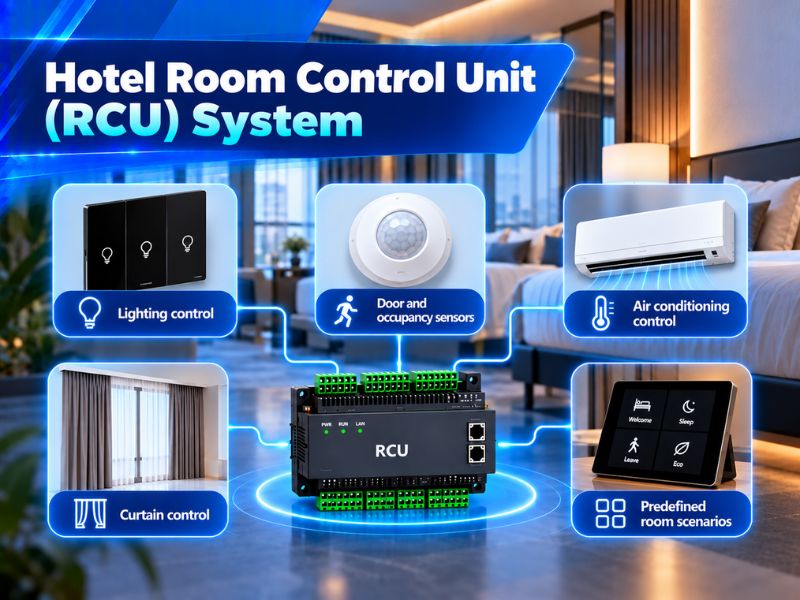
An RCU (Room Control Unit) is a controller used to receive signals and execute control logic within a hotel room.
Depending on the configuration, the RCU can connect to switches, sensors, lighting, air conditioning, curtains, and other related devices.
Commonly implemented functions include:
Switching individual lighting groups on and off.
Adjusting air-conditioning operation through compatible interfaces.
Opening and closing motorized curtains.
Receiving signals from door sensors and occupancy sensors.
Activating programmed control scenarios.
The RCU plays an important role in coordinating equipment operation, allowing hotels to implement automation functions according to actual requirements.
Lighting and air conditioning are two systems that directly affect guest comfort and energy consumption.
With Smart Hotel Solutions, lighting can be controlled by area or through predefined scenes such as Welcome, Relax, and Sleep. Guests do not need to operate each lighting group individually when adjusting the room environment.
For air conditioning, the system can work with thermostats, FCU controllers, or compatible control interfaces to adjust temperature and operating modes.
When integrated with room status data, devices can change their operating modes according to predefined conditions, helping reduce unnecessary operation.
Sensors provide input data that allows the system to determine actual room conditions. This information supports automated scenarios rather than relying solely on manual operation.
Common sensor types include:
Occupancy sensors: Help detect the presence of people within an area.
Door sensors: Provide door open/closed status.
Temperature sensors: Collect temperature data for control purposes.
Other sensors: Selected according to project functions and requirements.
Sensor data can be combined with other conditions to determine operating status. For example, the system can use sensor information and room status to adjust equipment operation according to programmed scenarios.
In hotels with many rooms, managing each device individually can increase the workload of the operations team.
A centralized management system collects data from rooms and devices within the scope of integration. Depending on the solution, operators can monitor equipment status, receive operational information, and perform selected management functions through a common interface.
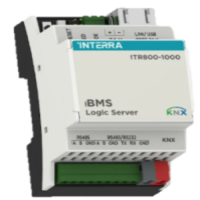
In addition, a Smart Hotel system can be designed to exchange data with PMS, BMS, or other management platforms through compatible interfaces and communication protocols.
Integration requirements should be defined during the design stage to ensure compatibility between systems.
One of the main objectives of implementing Smart Hotel Solutions is to reduce unnecessary management tasks, improve equipment monitoring, and support more efficient energy use.
In traditional hotels, checking the status of certain devices often requires staff to visit individual rooms. This can increase inspection time, particularly in hotels with many rooms.
When a hotel room management system with centralized connectivity is implemented, status data from compatible devices can be transmitted to a management interface.
This gives the operations team additional information to monitor equipment conditions and identify areas requiring inspection. However, the monitoring scope depends on the devices, available data points, and actual integration configuration.
Air conditioning and lighting may continue operating when rooms are unoccupied if appropriate control mechanisms are not implemented.
Smart Hotel Solutions support operating scenarios based on room status to help reduce unnecessary energy consumption.
For example:
When guests are using the room: Devices operate according to appropriate settings.
When the room is temporarily unoccupied: Selected devices can switch to energy-saving modes.
When guests check out: The system can return selected devices to predefined operating states.
These scenarios should be designed according to hotel procedures and actual usage conditions. The amount of energy saved depends on system configuration, operating hours, and equipment usage patterns.
During operation, some devices may experience abnormal conditions or fail to respond to control commands.
For devices capable of providing status or alarm data, the centralized management system can help technical staff identify potential problems for further inspection.
For example, information about connection status, operating status, or equipment faults can be displayed if supported by the system.
This function does not completely replace regular inspections and maintenance, but it can provide additional data to support hotel operations.
Check-in, room occupancy, and check-out stages typically involve different operational requirements.
When Smart Hotel Solutions are integrated with compatible management systems, room status can be used as a condition for activating equipment scenarios.
For example, after guests check out and the room status is updated, the system can switch lighting, air conditioning, or other devices to predefined modes.
This approach helps reduce repetitive tasks while maintaining consistent operation across rooms with the same design standards.
.jpg)
In addition to operational benefits, Smart Hotel Solutions aim to improve convenience during a guest's stay. Properly coordinated devices allow guests to operate equipment more easily and adjust the room environment according to personal preferences.
In hotel rooms with multiple lighting groups, curtains, and air-conditioning equipment, having too many individual switches can make the controls difficult for guests to learn.
A smart room control system allows compatible interfaces, such as smart switches, touch panels, or thermostats, to manage integrated functions.
Depending on the design, guests can:
Adjust lighting by area.
Change room temperature.
Open or close motorized curtains.
Activate predefined scenes.
Control interfaces should be intuitive and easy to use so that technology genuinely improves convenience rather than complicating the guest experience.
Each guest has different preferences regarding lighting, temperature, and relaxation conditions.
Smart Hotel Solutions can support predefined control scenes, allowing multiple devices to be adjusted simultaneously through a single action.
Common scenarios include:
Welcome: Sets appropriate lighting, curtain, and air-conditioning conditions when guests enter the room.
Relax: Adjusts lighting and equipment to create a relaxing environment.
Sleep: Turns off or dims selected lighting groups and adjusts curtains and other devices according to predefined sleeping conditions.
These scenarios can be customized according to room type, service standards, and individual hotel requirements.
Comfort depends not only on the number of modern devices installed but also on how effectively they work together.
When lighting, air conditioning, and curtains are properly integrated, guests can adjust room conditions without performing multiple separate actions.
For example, when preparing to rest, a predefined scene can close the curtains, dim the lights, and maintain the configured air-conditioning mode.
These functions contribute to a consistent guest experience, particularly for hotels aiming to establish smart room standards across different room categories.
Not every hotel requires the same level of automation. The selection of Smart Hotel Solutions should be based on building size, service standards, budget, and actual management requirements.
Small and Medium-Sized Hotels
For these hotels, essential functions such as lighting, air-conditioning, curtain control, and basic room scenes can be prioritized.
The configuration should be easy to use, convenient to maintain, and appropriate for the available investment budget.
Luxury Hotels and Resorts
Hotels with higher guest experience requirements can implement room control systems with more advanced scenarios, combining smart switches, touch panels, and centralized management systems.
In addition to convenience, the ability to coordinate control interface designs with the interior design should also be considered.
Hotels Undergoing Renovation or Upgrades
For operating hotels, automation implementation requires an assessment of existing electrical systems, air-conditioning equipment, communication infrastructure, and installed components.
A suitable solution must meet upgrade requirements while considering installation conditions, compatibility, and potential disruption to hotel operations.
To ensure that the system meets operational requirements, implementation should begin with an assessment of hotel needs rather than selecting equipment based solely on advertised features. Several important factors should be identified during the design stage.
First, hotels should clarify the problems they want to address, such as:
Which in-room devices need to be controlled?
Is centralized monitoring required?
Which scenarios need to be automated?
Is integration with PMS or BMS necessary?
How many rooms will be included in the system?
Identifying these requirements helps determine the appropriate configuration and avoid investing in unnecessary functions.
Smart Hotel systems may include components from different device categories. Therefore, compatibility between RCUs, switches, sensors, air-conditioning equipment, curtains, and management platforms must be verified.
Depending on the solution, the system may use communication protocols such as KNX, Modbus, BACnet, or other protocols supported by the devices.
In addition to communication protocols, the number of I/O points, load control methods, and compatibility with actual equipment must also be checked.
Automation scenarios should support guests' needs and the hotel's management procedures.
For example, energy-saving logic should not rely on a single signal if that signal is insufficient to accurately determine room occupancy status.
Scenarios should be tested under actual operating conditions to ensure that devices respond appropriately without causing inconvenience to guests.
Hotels may change room layouts, add devices, or expand their operations over time.
Therefore, when selecting Smart Hotel Solutions, it is important to consider the ability to expand the number of devices, modify control programs, and integrate additional functions.
The system should also include appropriate technical documentation, inspection procedures, and maintenance plans to support long-term operation.
(1).jpg)
Trí Việt Controls provides control devices and solutions for Smart Hotel systems, supporting the development of automation configurations tailored to the requirements of individual projects.
Device categories that may be considered for the solution include:
RCU controllers: Receive signals and execute control logic for in-room equipment.
Smart switches and touch panels: Provide control interfaces for hotel guests.
Sensors: Collect data on door status, occupancy, and environmental conditions.
Lighting, air-conditioning, and curtain control devices: Perform control functions according to the system design.
Management systems: Support centralized connectivity and monitoring within the available integration capabilities.
The system configuration should be selected based on hotel size, number of rooms, installed equipment, communication protocols, and operational requirements. These factors provide the foundation for developing a system that meets current needs while allowing future expansion.
Smart Hotel Solutions are not simply about installing technology in hotel rooms. They also help organize equipment control and management more effectively. When properly designed, these systems can support energy management, reduce repetitive operational tasks, and improve convenience for hotel guests.
Contact Trí Việt Controls for consultation on Smart Hotel Solutions tailored to the size, room standards, and management requirements of your hotel project.


Please leave your information, we will contact you to complete the order!