Learn in Detail What a Smart Fire Alarm System Is, How It Works, and How It Differs from a Conventional Fire Alarm System
Smart Fire Alarm System is increasingly important in modern buildings, where early fire detection requires more than simply issuing an alarm signal. The system also needs to identify incidents, monitor system status, and support centralized management. This is why smart fire alarm systems are receiving increasing attention in buildings, hotels, apartments, and large-scale projects.
What is a smart fire alarm system? It is a fire detection and alarm system capable of collecting, processing, and transmitting information from field devices to a control center, while also providing more detailed information about the location and status of an incident.
Unlike systems that simply provide zone-based alarms, smart systems typically use devices capable of identification or individual data transmission. This allows the control center to determine which device is reporting a fire, experiencing a fault, or showing an abnormal status.
Depending on the design, the system can integrate smoke, heat, and flame detectors, alarm devices, monitoring modules, and building management platforms. The goal is to detect incidents quickly, transmit clear alarm information, and help operators respond more accurately.
According to TCVN 7568-1:2024, fire detection and alarm systems include equipment used to detect fires and provide alarm signals. The standard also distinguishes fire alarm systems from standalone smoke detectors that are not connected to a system.
![]()
To better understand what a smart fire alarm system is, its operation can be viewed as a sequence from detecting an incident to processing and issuing an alarm.
Detect signs of fire: Detectors or sensors monitor characteristic signs such as smoke, heat, or flames in the protected area.
Transmit signals: When an abnormal condition is detected, the device sends information to the fire alarm control panel through the system's communication path.
Analyze and identify the event: The control panel receives the data, identifies the device or area generating the signal, and distinguishes between fire alarm, fault, or other monitored system states.
Issue an alarm: The system activates appropriate alarm devices to notify occupants and operating personnel.
Transmit information to management systems: For systems with integration capabilities, event data can be transmitted to management interfaces or related systems for centralized monitoring.
TCVN 7568-14:2025 requires system design to focus on rapid fire detection and the conversion of detection signals into clear alarm signals for people inside the building.
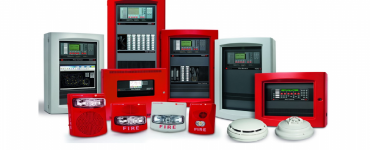
A complete system does not consist of the control panel alone but involves multiple groups of devices working together, from detection to alarm notification and data transmission.
These devices directly monitor signs that may occur when a fire breaks out. Depending on the characteristics of the area, the system may use smoke detectors, heat detectors, flame detectors, or other suitable types of detectors.
TCVN 7568 includes separate standards for various equipment groups, such as point-type heat detectors, point-type smoke detectors, and carbon monoxide (CO) gas detectors.
The control panel receives signals from field devices, processes information, and controls alarm operations. In a smart system, the control panel can provide detailed information about the device or area where an event is occurring instead of simply issuing a general alarm.
This group includes devices such as sounders, fire alarm indicators, and information display devices. They help notify occupants and operating personnel when the system detects an incident.
Input/output modules can be used to monitor or control external devices connected to the fire alarm system. TCVN 7568-18:2016 provides specific requirements for input/output devices used in fire detection and alarm systems.
![]()
The main difference lies in the ability to collect and process information, rather than simply whether the system is network-connected or uses electronic devices.
| Criteria | Conventional Fire Alarm System | Smart Fire Alarm System |
|---|---|---|
| Incident identification | Usually identifies the affected area/zone | Can identify a specific device or address |
| Event information | Basic | More detailed information about devices and status |
| Device monitoring | Limited depending on the system | Can provide detailed status monitoring |
| Troubleshooting | Requires more direct inspection | Supports faster identification of location and status |
| Management of large buildings | More difficult to expand as the number of zones increases | More suitable for systems with many points and centralized management requirements |
| System integration | Depends on configuration | Can support connection with other management systems |
However, it should not be assumed that every addressable system automatically has all the features of a "smart" system. The actual level of intelligence depends on the devices, control panel, management software, and system architecture implemented.
The following features make smart fire alarm systems more suitable for buildings with a large number of devices and centralized management requirements.
The system can provide specific information about the device or area generating a signal, helping operators quickly identify the location that needs to be inspected instead of searching across a large area.
In addition to fire alarm status, the system can monitor abnormal conditions such as device faults, communication failures, or events requiring attention, depending on the capabilities of each system.
Alarm information can be displayed on the control panel or connected management interfaces, allowing operating personnel to respond to events more quickly.
In modern buildings, fire alarm systems can be designed to exchange information with related building systems according to the architecture and requirements of the project. TCVN 7568-14:2025 also allows additional devices, such as remote control terminals or display panels, to be incorporated into the system design as long as they do not affect the operation of the fire alarm system.
![]()
With the ability to manage multiple devices and provide detailed event information, this solution is particularly suitable for large-scale buildings or projects that require centralized monitoring.
Office buildings: Manage multiple floors and areas while supporting quick identification of alarm locations.
Hotels and resorts: Monitor guest rooms, corridors, service areas, and technical spaces within the same system.
High-rise apartment buildings: Suitable for projects with a large number of apartments and common areas requiring centralized management.
Shopping malls: Monitor multiple areas with different functions and operating conditions.
Factories and industrial parks: Can be deployed in production areas, warehouses, technical rooms, and locations with specific fire detection requirements.
Hospitals: Support fire alarm system management across multiple areas and floors where rapid response is required in the event of an incident.
The selection and implementation should still be based on the characteristics of the building, environmental conditions, and specific design requirements. TCVN 7568-14:2025 specifies design and installation requirements for fire alarm systems in buildings and structures.
Not every building requires the same configuration, so selection should begin with actual requirements rather than simply the number of features offered by the equipment.
Building scale: Determine the number of floors, protected areas, and devices that need to be managed.
Environmental conditions: Consider dust, moisture, temperature, production activities, and other factors that may affect detection performance.
Number of monitoring points: Calculate the number of devices required and the potential for future expansion.
Compatibility: Ensure that detectors, modules, the control panel, and related devices can operate together seamlessly.
Integration capabilities: If the building has a BMS or centralized management system, the required data exchange capabilities should be determined during the design stage.
Applicable standards: System design and equipment selection must comply with the standards, regulations, and legal requirements applicable to the type of building.
In particular, TCVN 7568-14:2025 is currently an effective Vietnamese national standard covering the design and installation of fire alarm systems for buildings and structures, replacing the previous versions TCVN 7568-14:2015 and TCVN 5738:2021.
A smart fire alarm system is not simply a system that issues an alarm when a fire occurs. It is also designed to identify events, monitor system status, and centrally manage information. When properly selected and implemented according to the characteristics of the building, this solution can improve the ability to detect incidents and support faster and more accurate response. If you need advice on smart fire alarm systems, fire detection equipment, or integrated fire alarm solutions for your project, Trí Việt Controls can support you in selecting a configuration that meets the technical requirements of each project.
Please leave your information, we will contact you to complete the order!