Tầng 8, Tòa nhà Sannam, số 78 Phố Duy Tân, P.Dịch Vọng Hậu, Q. Cầu Giấy, Tp. Hà Nội, Việt Nam

Advisory
Direct: 0904565626
Advisory
Direct: 0904565626
Learn about thermostats for buildings, different types of temperature controllers, how to choose the right device, and their applications in modern HVAC and BMS systems.
A building thermostat is a device used to control temperatures in individual rooms or zones within an HVAC system. It measures the actual temperature, compares it with the setpoint, and sends control signals to fans, valves, or compatible air-conditioning equipment. When integrated with a BMS, thermostats can also support centralized temperature monitoring and management. What types of thermostats are available, how should they be selected, and what should be considered during implementation?
A thermostat for buildings is a temperature control device used in HVAC (Heating, Ventilation, and Air Conditioning) systems. It measures the temperature in the installation area, compares it with the setpoint, and generates control signals to maintain the desired temperature conditions.
In systems using FCUs (Fan Coil Units), thermostats can control fan speeds, chilled water valves, or hot water valves, depending on the configuration. In other HVAC systems, thermostats may be designed to control standalone air conditioning units, heating equipment, or zone controllers.
The difference between conventional thermostats and those used in modern buildings lies in their integration requirements. In addition to adjusting room temperatures, some thermostat models support communication protocols for connecting to a Building Management System (BMS), enabling centralized monitoring and control.
HVAC thermostats are available with various control technologies, ranging from basic devices to electronic models with communication capabilities. Understanding these types helps designers and operators select suitable equipment based on building size and automation requirements.
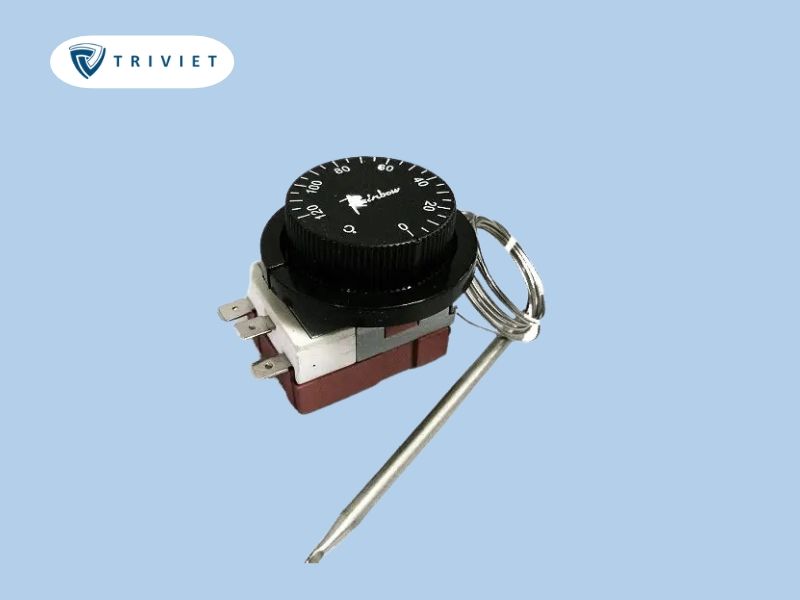
Mechanical thermostats use temperature-sensing mechanisms and mechanical contacts to switch control signals on or off according to the set temperature.
Users typically adjust the temperature using a rotary dial, sometimes combined with switches for selecting operating modes or fan speeds, depending on the product.
Their advantages include relatively simple construction, ease of use, and no requirement for a control network connection. However, their configuration, parameter display, and system integration capabilities are generally more limited than those of electronic thermostats.
Mechanical thermostats are suitable for areas requiring independent temperature control without centralized monitoring or remote parameter adjustment.
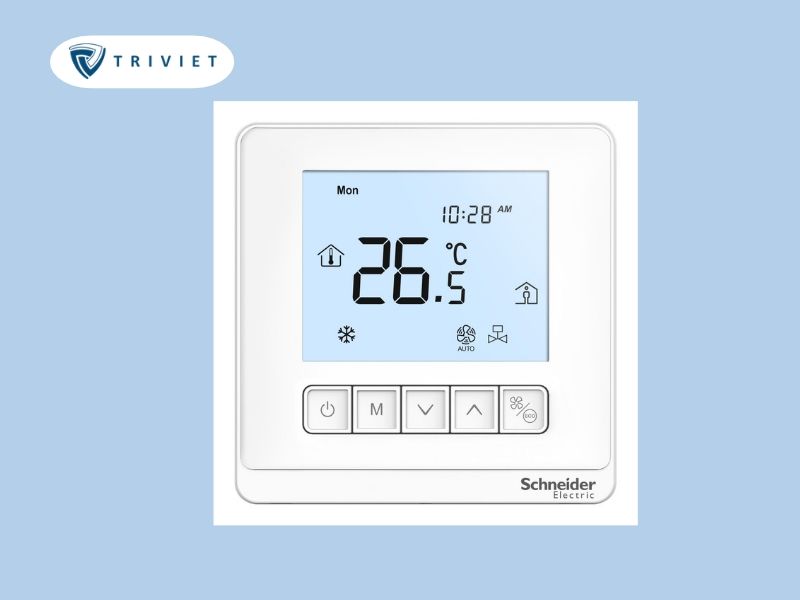
Digital thermostats use temperature sensors and electronic processing circuits to perform control functions. They are commonly equipped with LCD or LED displays showing room temperature, setpoint, and operating status.
Depending on the model, digital thermostats may support cooling and heating mode selection, fan speed adjustment, or operating schedules.
Their flexible configuration makes them suitable for various HVAC systems in offices, hotels, and apartments.
However, not all digital thermostats support BMS communication. Technical documentation should be checked when centralized management is required.
A touch thermostat is a type of electronic thermostat equipped with a touch-sensitive interface instead of conventional buttons or rotary dials.
This design provides more intuitive temperature adjustment and complements modern interior spaces.
Some touch thermostat models display operating modes, fan status, time, and other settings. Depending on the version, they may also include control locking or temperature setpoint limits for management purposes.
These thermostats are commonly considered for hotels, luxury apartments, meeting rooms, and areas with high aesthetic requirements.
BMS-compatible thermostats feature communication interfaces such as Modbus RTU or BACnet MS/TP, depending on the product model.
Through suitable connections, these devices can exchange data with building automation and management systems.
Supported information may include room temperature, setpoint, fan status, and operating mode. The BMS may also send commands to adjust setpoints or change operating modes if the thermostat supports these functions.
This type of thermostat is suitable for buildings requiring management of multiple rooms or zones, particularly where coordinated operation, centralized monitoring, and integration with other technical systems are necessary.
Selecting a thermostat should not be based solely on appearance or price. Compatibility with the existing HVAC system must also be evaluated.
A feature-rich device that does not match the fan configuration, valve type, or communication protocol may still cause difficulties during implementation.
First, determine whether the thermostat will be used for an FCU, VAV system, standalone air conditioning unit, or heating system.
Each equipment type has different control methods and signal requirements.
For FCUs, it is necessary to identify whether the system uses a 2-pipe or 4-pipe configuration, the number of fan speed stages, and the valve control method.
Some thermostats support only specific configurations, while others allow multiple equipment configurations.
Identifying the correct configuration from the beginning helps prevent situations where the thermostat cannot control all required HVAC functions.
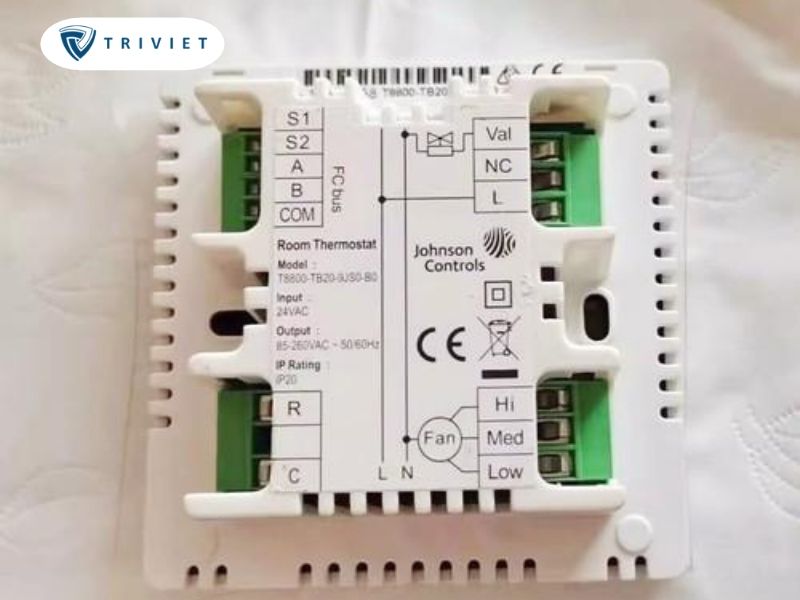
Thermostats for buildings may operate at different supply voltages depending on their design. Therefore, the supply voltage must be checked before selecting and wiring the device.
In addition to the power supply, the output signal type must match the actuator or controlled equipment.
Common control methods include:
On/Off control: Opens or closes a control contact or signal to operate equipment.
0–10 VDC control: Uses an analog signal to regulate compatible equipment.
Floating control: Controls actuators using increase/decrease or timed open/close signals.
The relay contact load rating, valve type, and fan control method must also be checked.
Thermostats should not be used to directly switch loads exceeding the manufacturer's specified technical limits.
Measurement accuracy depends on sensor quality and installation conditions. In HVAC systems, temperature sensors should be selected according to the required measurement range, accuracy, and monitoring needs of each area.
Sensor accuracy affects how accurately the thermostat detects the actual temperature in the occupied area.
When selecting an HVAC thermostat, consider its measurement range, accuracy, resolution, and allowable temperature setpoint range.
In addition to device specifications, installation location also affects measurement results.
A thermostat installed near an air conditioning outlet, heat source, or area exposed to direct sunlight may measure a temperature that does not represent the overall space.
For areas requiring stable temperature control, priority should be given to devices with suitable measurement and control characteristics, while sensors should be installed according to technical guidelines.
For buildings requiring centralized HVAC management, communication capability is an important selection criterion.
The thermostat must support a protocol compatible with the controller or BMS currently in use.
Two commonly considered protocols include:
Modbus RTU: Enables data exchange through serial communication connections, commonly using RS485.
BACnet MS/TP: Supports data exchange in building automation systems through a suitable communication network.
In addition to the protocol, the list of registers or data points provided by the thermostat must be checked.
Supporting Modbus or BACnet does not necessarily mean that every function can be monitored and controlled through the BMS.
In buildings with multiple users, thermostat interfaces should be easy to operate and display information clearly.
Functions worth considering include temperature adjustment, fan mode selection, keypad locking, and setpoint limits.
For hotels or offices, limiting the adjustable temperature range can support operational management and prevent adjustments outside the desired range.
Configuration, maintenance, and device replacement capabilities should also be considered to facilitate long-term operation.
Thermostats are used in various building types to maintain temperatures appropriate for the functions of individual spaces.
Depending on operational requirements, they may operate independently or connect to centralized control systems.
In offices, thermostats help adjust temperatures in workspaces, meeting rooms, and separate functional areas.
Zone-based control prevents the entire building from having to maintain the same temperature setting.
When integrated with a BMS, operators can monitor equipment status and establish operating schedules that match working hours.
This helps reduce unnecessary HVAC operation outside business hours.
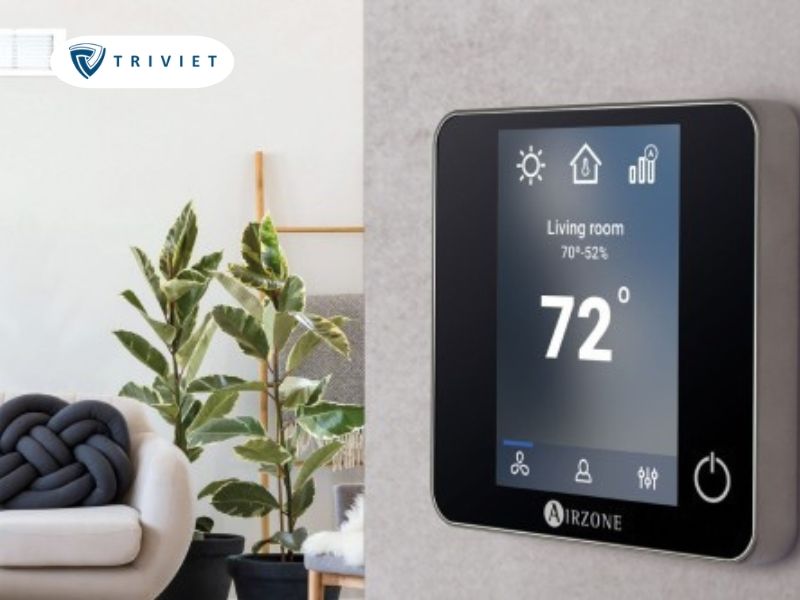
HVAC thermostats are used to adjust temperatures in guest rooms, conference rooms, and service areas.
They allow guests to select temperatures according to their preferences.
With a properly designed system, thermostats can work with hotel room management or room control systems to apply operating modes based on occupancy status.
This capability depends on the thermostat model and the actual integration design.
In apartments equipped with central air conditioning systems or FCUs, thermostats help control temperatures independently in different rooms or areas.
Occupants can adjust cooling modes and fan speeds according to their daily needs.
Some thermostat models can also integrate with smart home control systems if they support the required protocols or integration methods.
Shopping malls typically contain multiple areas with different occupancy levels and air conditioning requirements.
Thermostats are used in zone control systems to help maintain appropriate temperature conditions.
When integrated with a BMS, operators can monitor the status of different areas and adjust operating schedules according to the building's usage hours.
In hospitals, thermostats may be used in offices, administrative areas, waiting rooms, and other spaces requiring comfort air conditioning.
For cleanrooms, operating rooms, or areas with specialized environmental requirements, conventional thermostats cannot replace dedicated HVAC control systems.
These areas require solutions for controlling temperature, humidity, pressure, and ventilation according to specific design requirements.
In large buildings, managing individual thermostats can be challenging for technical teams.
When communication-enabled devices are used, the BMS can consolidate information and support the control of multiple areas through a common platform.
Communication-enabled thermostats can provide parameters such as room temperature, setpoint, fan status, and operating mode to the BMS if the corresponding data points are supported.
This allows technical staff to monitor operating conditions across multiple areas without inspecting each room individually.
The data can also help identify areas operating abnormally or requiring equipment inspection.
When thermostats support compatible communication protocols, temperature data and equipment status can be sent to BMS software for centralized monitoring, setpoint management, and HVAC control. The available functions also depend on each device's supported data points and configuration.
The BMS can organize thermostats into groups by floor, room, or functional area.
For models supporting writable control data points, operators can modify setpoints or operating modes within their assigned permissions.
For example, office areas may follow different temperature schedules from meeting rooms or service areas.
Zoning allows HVAC systems to respond to actual usage requirements rather than maintaining the same operating mode throughout the entire building.
BMS-connected thermostats can contribute to energy management strategies through operating schedules, energy-saving modes, and temperature setpoint limits.
For example, when an area is no longer occupied, the system may adjust the setpoint or switch to a reduced-load mode according to a configured scenario.
This control method helps limit unnecessary HVAC equipment operation.
However, actual energy savings depend on system design, thermal loads, occupancy schedules, and the overall control strategy.
During HVAC design and implementation, selecting an unsuitable thermostat can cause difficulties with wiring, configuration, and operation.
Several issues require particular attention:
Failing to check the FCU configuration: Selecting a thermostat that does not support the existing 2-pipe or 4-pipe system or valve type.
Incorrect voltage and control signals: This may cause equipment malfunction or damage during wiring.
Misunderstanding connectivity capabilities: A thermostat with Wi-Fi does not automatically support Modbus or BACnet protocols for BMS integration.
Ignoring the data point list: The device may establish a connection but fail to provide all the desired monitoring and control functions.
Installing the thermostat in an unsuitable location: Placing it near heat sources, air outlets, or areas directly affected by environmental conditions can distort temperature measurements.
Overlooking maintenance requirements: Selecting devices that are difficult to configure, lack technical documentation, or do not suit long-term operational requirements.
To minimize these problems, HVAC drawings, wiring diagrams, technical specifications, and integration requirements should be reviewed before selecting a thermostat model.
Tri Viet Controls supplies FCU thermostat models for HVAC systems in buildings.
Depending on the model, these devices can meet local room control requirements or integrate with building management systems.
To better understand the device structure, operating principle, and main components, you can explore the FCU controller in HVAC systems. This article explains how the thermostat works with sensors, fans, and valves to maintain the required temperature setpoint.
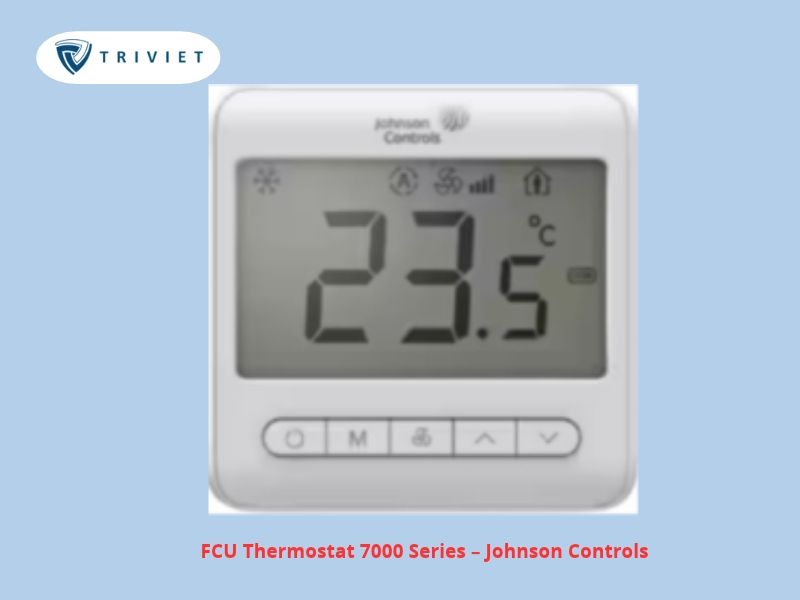
The T7000 Series is designed to control cooling and heating systems in commercial, industrial, hospitality, and residential buildings.
The devices support different operating modes depending on the version, with some models featuring Modbus RTU communication for connection to building automation systems.
This series may be considered for projects requiring room temperature control combined with centralized monitoring.
The T5000 Series consists of electronic thermostats equipped with LCD displays, designed for cooling and heating control applications.
These devices are suitable for FCU systems and certain compatible air conditioning equipment, including configurations using control valves and multi-speed fans.
When selecting a model, the exact product code must be checked to determine the supply voltage, valve type, and specific control functions.
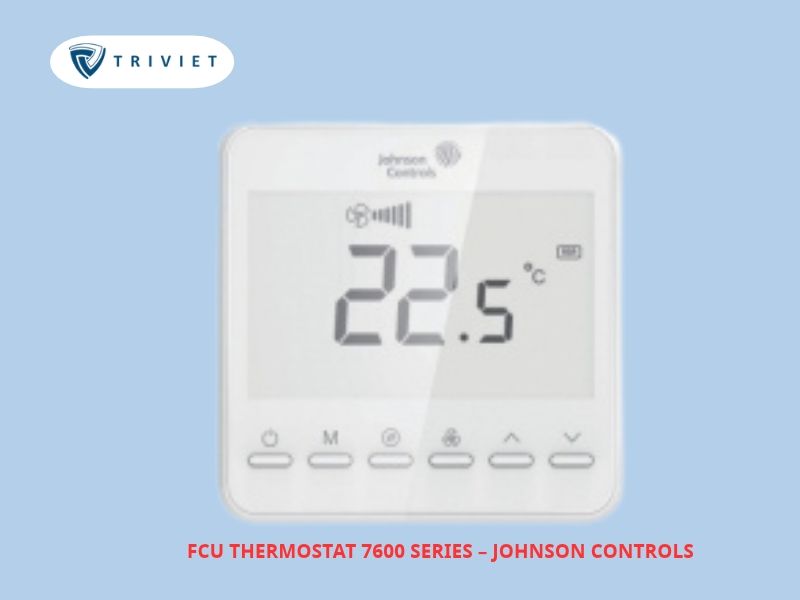
The T7600 Series includes thermostats designed for cooling and heating control in residential, commercial, and industrial buildings.
Some versions support Modbus communication, allowing data exchange with compatible management systems.
This product series may be considered for projects requiring FCU control or other HVAC equipment compatible with the functions of each model.
When selecting thermostats for buildings, priority should be given to reviewing technical specifications and actual compatibility rather than relying solely on the product series name.
A building thermostat is an important component of HVAC systems, helping regulate temperatures by zone and optimize air-conditioning operation. Selecting the right device requires consideration of FCU configuration, control signals, sensor accuracy, and BMS integration capabilities.
Tri Viet Controls supplies thermostats, FCU controllers, and equipment for building management systems. Contact Tri Viet Controls for advice on selecting suitable devices and HVAC/BMS control solutions based on your project's technical requirements.
Contact Tri Viet Controls for advice on selecting thermostats for buildings and HVAC/BMS integration solutions suitable for your project.








Please leave your information, we will contact you to complete the order!