Tầng 8, Tòa nhà Sannam, số 78 Phố Duy Tân, P.Dịch Vọng Hậu, Q. Cầu Giấy, Tp. Hà Nội, Việt Nam

Advisory
Direct: 0904565626
Advisory
Direct: 0904565626

How does a fire alarm control panel receive, classify, and process signals from detectors, manual call points, and peripheral devices? Learn the process.
A fire alarm control panel receives and processes signals from detectors, manual call points, and monitoring devices to determine the system status. Based on the received data, the panel can display information and activate configured alarm logic, allowing the system to respond appropriately when an event occurs.
For the system to detect and respond to signs of fire, input devices need to continuously communicate with the central panel. Depending on the type of fire alarm system, the signal transmission method and device identification method may vary.
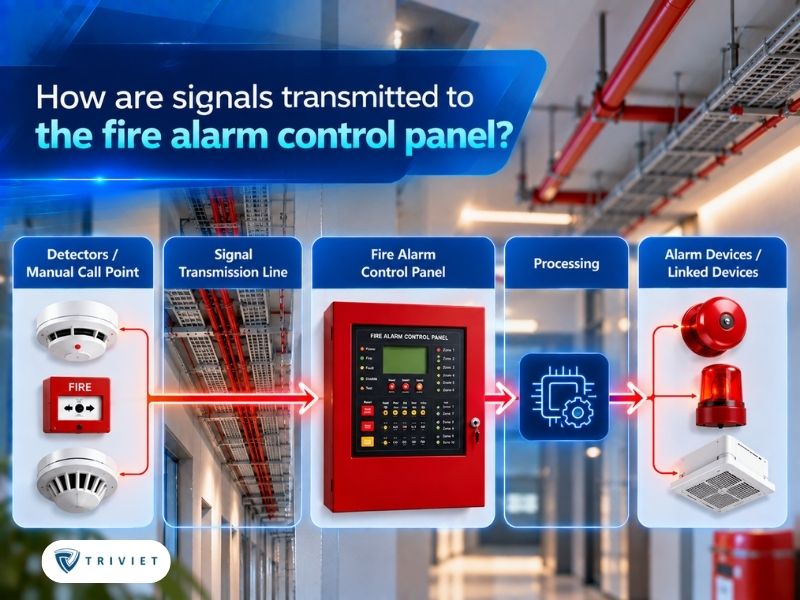
The basic signal flow can be illustrated as follows:
Detector/Manual Call Point → Signal Transmission Line → Fire Alarm Control Panel → Processing → Alarm Devices/Interlock Devices
Detectors and other input devices are responsible for detecting events or providing status information. The signals are then transmitted to the fire alarm control panel through the corresponding wiring or loop.
At the central panel, the data is processed according to the system configuration. If an event requiring an alarm is detected, the panel can display the relevant information and activate the programmed outputs.
Therefore, system performance depends not only on the detection capabilities of the detectors but also on signal transmission, panel configuration, and the configured response logic.
During operation, the central panel does not only receive fire alarm signals. Depending on the configuration, the system may also need to receive various status signals so that operators can identify the condition of devices and communication circuits.
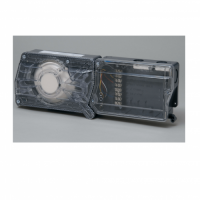
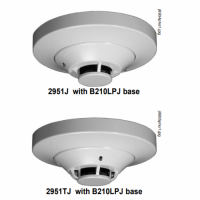
Smoke detectors and heat detectors are commonly used detection devices in fire alarm systems. A smoke detector detects the presence of smoke within the monitored area and sends a signal to the central panel for processing.
Smoke detectors respond to smoke characteristics according to their specific detection principles, while heat detectors operate based on temperature conditions or changes in temperature, depending on their design.
When the activation conditions are met, the device sends a signal to the central panel. The fire alarm control panel receives the signal and determines the corresponding status before executing the configured response actions.
In an addressable fire alarm system, the panel can receive information associated with the address of each device, helping operators identify the location of an event more precisely.
Not every fire alarm event begins with an automatic detector. When people inside a building identify a potential fire hazard, a manual call point allows them to actively send an alarm signal to the central panel.
Once the manual call point is activated, the signal is transmitted to the panel and processed according to the system programming.
Manual call points should be positioned according to the system design and applicable building requirements so that occupants can access them when necessary.
In addition to devices that directly detect fire, the system may receive supervisory signals from fire alarm field devices or related systems through appropriate modules and interfaces.
Depending on the system design, supervisory signals can be used to provide the central panel with the status of a device, circuit, or technical system.
Specific monitoring capabilities depend on the type of fire alarm control panel, connection modules, and the implemented system architecture.
The ability to detect faults helps operators identify problems that may affect the operation of the fire alarm system.
Depending on the equipment and configuration, the panel may indicate conditions such as:
Communication line faults.
Loss of connection with a device.
Power supply faults.
Loop or circuit faults.
Other abnormal system conditions.
Fault signals need to be distinguished from fire alarm signals so that operators can perform appropriate inspections and corrective actions.
After receiving data, the fire alarm control panel needs to determine what status the signal represents, where the event has occurred, and what action should be taken. This is an important step that determines how the system responds.
The central panel can classify different statuses according to the capabilities of the system, such as:
Normal operating status.
Fire Alarm (Alarm).
Trouble/Fault.
Supervisory, if supported by the system.
This classification prevents all signals from being displayed and processed in the same way.
For example, a communication line fault needs to be reported for technical inspection, but it does not mean that a fire has been detected.
The level of location identification depends on the system architecture.
In a conventional fire alarm system, the panel primarily identifies the zone in which the signal has occurred. Operators then need to inspect the devices located within that area.
In an addressable fire alarm system, each device has its own identification address. When an event occurs, the panel can identify the corresponding device information according to the system configuration.
Clear location identification is particularly useful in buildings with multiple floors, multiple areas, or a large number of devices.
After the signal has been processed, the information needs to be displayed so that operators can quickly identify the system status.
Depending on the model, the interface may include:
Display screen.
Status LEDs.
Audible indication at the panel.
Keys or other control components on the panel.
Displayed information may include the event type, zone, device address, or other data depending on the capabilities of the panel.
A clear interface helps the operations team identify the area that needs to be inspected instead of having to check the entire system.
After identifying the event, the panel executes the output logic programmed according to the system design.
A fire alarm signal may trigger different actions depending on the area, alarm level, and operating strategy of the building.
Therefore, control logic should be developed according to the fire alarm design and actual interlock requirements rather than applying the same sequence of actions to every building.
For buildings that require detailed monitoring and device-level event identification, a smart fire alarm system can be considered to improve centralized monitoring and information processing.
Detecting a signal is only one part of the process. Once a fire alarm condition has been identified, the system needs to transmit warnings and execute the designed responses.
Sirens, bells, or visual alarm devices help communicate alarm signals to people in the affected area.
Depending on the zoning and programming strategy, alarm devices can be activated by individual areas or according to the logic of the entire system.
Output capacity, the number of circuits, and control methods need to be calculated according to the panel configuration and fire alarm system design.
Some buildings use voice notification systems or Voice Evacuation systems to support alarm notification and evacuation guidance.
When designed as an integrated solution, signals from the fire alarm system can be used to activate the corresponding notification scenarios.
The operating method depends on the configuration of the fire alarm system, voice evacuation system, and the integration strategy implemented in the building.
Fire alarm signals can also be used in interlock logic with other building systems if required by the building design.
An important point is that the fire alarm control panel does not necessarily directly supply power to or control every building system device. In many cases, the panel provides signals through relays, modules, or communication interfaces so that the related system can perform the required action according to the design.
Therefore, during implementation, it is necessary to clearly determine which device issues the command, which device receives the signal, and which system is responsible for performing the final action.
.jpg)
Operators need to distinguish an actual fire alarm from technical faults or supervisory conditions. Therefore, status indication is an important function of the central panel.
Depending on the product series, status categories may include:
Normal: The system is operating normally.
Alarm: The system has received a fire alarm signal.
Trouble/Fault: A fault has occurred involving a device, power supply, or communication line.
Supervisory: A supervisory condition for systems that support this function.
Device/Loop Status: Information about devices or loops.
Zone/Location: The area or location associated with the event.
Some addressable panels can also store event history. This data supports the review of alarms, faults, or status changes that have occurred.
Specific display and data storage capabilities should be checked according to the specifications of each model. It should not be assumed that every fire alarm control panel provides the same functions.
When selecting a central panel, the actual number of devices and the processing requirements of the building should be determined in advance. A panel with many features may still cause implementation difficulties if it is not suitable for the system architecture.
For a conventional fire alarm system, the number of zones that need to be managed should be determined. For an addressable system, attention should be paid to the number of devices the panel can support according to its configuration.
The selected capacity should account for current requirements as well as reasonable future expansion if additional devices are planned.
For an addressable fire alarm system, the number of loops is an important specification to check.
The number of loops affects how devices are organized and the overall system capacity that the panel can support. In addition to the initial configuration, the ability to add loops or expand the system should be evaluated according to the design of each panel series.
Not every detector, module, or peripheral device can be used with every central panel.
When selecting equipment, the following factors should be checked:
Types of field devices.
Compatibility.
Connection methods.
Power requirements.
Signal transmission and processing capabilities.
Checking compatibility during the design stage helps minimize problems during system installation and configuration.
Large buildings may require different fire alarm and interlock logic for different areas.
Therefore, the programming capabilities of the panel should be checked to determine whether the device can support the required scenarios.
The more complex the logic, the more important it becomes to clearly define the requirements during the design stage.
In addition to standalone operation, some fire alarm control panels may need to exchange data with other systems or monitoring platforms.
In such cases, the supported communication interfaces, integration modules, and data exchange methods should be evaluated.
Integration capabilities must be verified according to the specific model and actual system architecture. It should not be assumed that every fire alarm control panel can connect directly to a BMS or other systems.
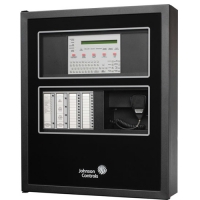
Trí Việt Controls currently provides various fire alarm control panels for different system sizes and requirements. The current product portfolio includes models such as CAD150-1, CAD150-4, CAD150-8, CAD250, Voice Evacuation Fire Panel, IFC-320, IFC2-640, and IFC2-3030.
When selecting equipment, the decision should not be based solely on the number of zones or loops. It is also necessary to consider the number of field devices, signal processing capabilities, logic programming requirements, expansion options, and integration capabilities with the building's technical systems.
A suitable fire alarm control panel should be capable of receiving signals, classifying system statuses, identifying event locations, and activating the correct alarm or interlock logic according to the system design. Contact Trí Việt Controls for consultation on selecting the appropriate fire alarm control panel configuration for the scale and requirements of each fire alarm system.







Please leave your information, we will contact you to complete the order!