Tầng 8, Tòa nhà Sannam, số 78 Phố Duy Tân, P.Dịch Vọng Hậu, Q. Cầu Giấy, Tp. Hà Nội, Việt Nam

Advisory
Direct: 0904565626
Advisory
Direct: 0904565626

VMS camera management system centralizes video, cameras, users, and alerts, improving the efficiency of security surveillance.
As camera systems expand in number and coverage, managing each device separately is no longer effective. Video Management System software centralizes data, devices, and alerts on a unified platform.
For large-scale surveillance systems, the challenge is not only the number of cameras but also the ability to manage data and respond to security events. Video Management System software shifts surveillance from a model that depends on individual devices to centralized management on a single platform.
Instead of accessing multiple recorders or individual camera systems, operators can monitor multiple areas, control access permissions, search video data, and handle alerts through a unified management interface. This approach is also suitable for businesses with multiple areas or facilities that need to be monitored simultaneously.
For large-scale systems, VMS also provides a foundation for connecting cameras, recording devices, storage servers, and other security systems. Some professional VMS platforms, such as exacqVision, introduced by Tri Viet Controls, can manage multiple locations, assign role-based permissions, and provide access from computers or mobile devices.
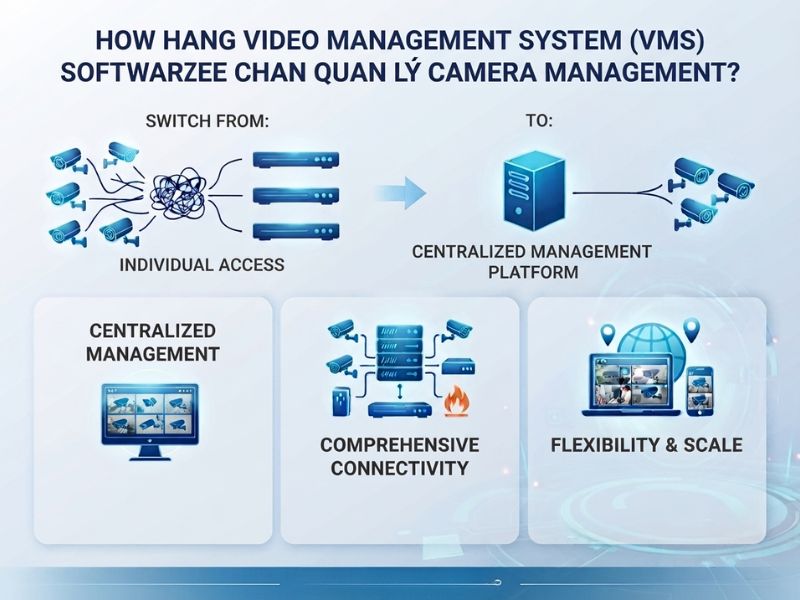
A video management system VMS should not be evaluated solely based on its ability to display live video. For professional projects, a VMS platform needs to meet requirements for device management, data management, user management, and event handling at the same time.
VMS allows multiple video streams to be displayed simultaneously on one interface, enabling security staff to monitor different areas without constantly switching between management devices.
Depending on the project scale, the interface can be organized by area, floor, building, branch, or camera group. This organization is particularly useful for facilities with dozens, hundreds, or even more cameras that need to be operated and monitored.
Centralizing the interface also reduces the number of operations required during monitoring and helps operators quickly identify the camera that needs to be checked when an event occurs.
As the number of cameras increases, the volume of recorded video data also grows. Therefore, video management and retrieval are among the most important functions of a VMS video management system.
Users can search data by camera, time, or event to quickly identify the video segment that needs to be reviewed. This helps reduce retrieval time when verifying incidents, checking activities in a specific area, or supporting internal investigations.
For projects that require long-term video retention, selecting an appropriate server architecture and storage system should also be considered from the initial design stage.
Not all users need the same level of access. VMS should allow administrators to configure permissions based on roles, departments, areas, or camera groups.
For example, security personnel may be granted access to monitor cameras within their assigned areas, while managers may have access to a wider range of locations. Permission management helps limit unnecessary access and protect video data from unauthorized use.
For large-scale projects, organizations should prioritize platforms with account management, user activity logging, and clear access control mechanisms.
Rather than simply recording video for review after an incident occurs, VMS can serve as a platform for receiving and managing events generated by the camera system.
When a predefined event occurs, the system can generate an alert for operators to review. Depending on the solution, events may involve motion detection, intrusion detection, camera status, or video analytics conditions.
As a result, the camera management system shifts from passive monitoring toward more proactive event detection and response.
>>> Learn more: Camera system management software
When a business operates multiple buildings, areas, or branches, the requirement is not simply to connect cameras but also to establish a unified management model. This is where VMS offers a clear advantage over independently managed camera systems.
A suitable VMS platform can organize cameras by location, area, or functional group. Central administrators can monitor multiple surveillance points without having to operate each system independently.
This model is suitable for businesses with multiple facilities, factories with multiple areas, urban developments, or projects consisting of multiple buildings.
In particular, for multi-branch operations, system data and status can be managed through a hierarchical structure, making it easier for security teams to identify camera locations and respond to events.
VMS acts as a management layer connecting cameras, recording devices, servers, and storage infrastructure. Therefore, device compatibility needs to be determined during the system design stage.
For existing systems, businesses should verify whether the software can connect to the IP cameras, NVRs, and devices already in use rather than assuming that the entire system must be replaced.
Some camera solutions supplied by Tri Viet Controls are also designed to connect with VMS platforms, storage devices, and other security systems.
A camera system may continue to expand as a facility grows. Therefore, management software needs a flexible architecture that allows cameras, locations, users, and storage capacity to be added without rebuilding the entire system.
From the beginning, businesses should determine the current number of cameras, expected future expansion, and required video retention period. These parameters help determine the appropriate servers, software licenses, storage systems, and network infrastructure.
For large-scale projects, the VMS architecture can be designed as either centralized or distributed, depending on requirements for performance, availability, and connectivity between locations.
.jpg)
The development of AI is changing how video data is utilized. Instead of simply providing images for operators to monitor, video management system VMS platforms can integrate with analytics tools to automatically identify noteworthy events.
Tri Viet Controls also introduces camera solutions that can integrate AI and video analytics, including object recognition, intrusion detection, and intelligent alert functions.
Motion analytics helps the system identify unusual activity within a surveillance area instead of requiring staff to continuously monitor every screen.
For restricted areas, VMS can combine cameras and analytics rules to detect entry into prohibited zones, line crossing, or movement during configured time periods.
This is particularly useful for restricted-access areas, corridors, warehouses, fences, or locations that require monitoring outside normal operating hours.
AI technologies running on cameras or analytics servers can help recognize and classify objects appearing in video footage, such as people or vehicles.
When integrated with VMS, analytics results can be used to generate events, filter data, or support video searches. As a result, operators do not need to manually review hours of recorded footage to locate a specific event.
However, actual analytics capabilities depend on the camera, VMS software, processing hardware, and configuration of each project.
One of the key benefits of video analytics is the ability to turn recorded footage into searchable event-based data.
Instead of reviewing hours of video sequentially, operators can use supported criteria to narrow down the data that needs to be examined. This approach can significantly reduce processing time when an incident requires investigation.
For projects with large volumes of video data, this is an important factor to consider when selecting a VMS rather than evaluating the system solely based on camera image quality.
Not every camera system requires VMS deployment at the same level. Businesses should consider investing in VMS when there are signs that the existing management model is becoming difficult to operate and control.
- Large number of cameras: Monitoring and managing numerous cameras through separate interfaces becomes increasingly difficult to control.
- Multiple surveillance areas: Cameras are distributed across different floors, areas, or functional zones.
- Multiple locations: The business needs to manage cameras across multiple branches, buildings, or facilities from a central location.
- Large volumes of data: Manually searching recorded footage takes significant time.
- Centralized alerts required: The business wants to quickly identify abnormal events instead of only reviewing video after an incident occurs.
- Video analytics requirements: The system needs AI to detect, classify, or search for specific events.
- Continuous system expansion: The number of cameras is expected to increase in future phases.
In these situations, deploying a VMS video management system during the design stage can help businesses establish a more suitable management architecture rather than having to migrate to a new system after the surveillance infrastructure has become too large.
.jpg)
Selecting Video Management System software should be based on the project's overall architecture rather than simply the number of cameras supported by the software. The following criteria should be evaluated during the initial site survey and planning stage.
Businesses need to verify compatibility between the VMS and existing cameras, NVRs, servers, storage devices, and other related equipment.
Good compatibility allows businesses to make use of existing infrastructure, reduce replacement costs, and facilitate phased system upgrades.
The current number of cameras and expected future expansion should be clearly defined. In addition to the number of cameras, businesses also need to consider resolution, recording rate, retention period, and the number of concurrent users.
A suitable VMS should be capable of scaling according to business requirements while maintaining stable performance and reliable management capabilities.
Camera data may contain important information related to people, assets, and operational activities. Therefore, security should be considered a mandatory criterion.
Businesses should prioritize solutions that provide account management, role-based permissions, access control, and activity logs. These mechanisms help control who can view, manage, or use video data.
A modern surveillance system typically does not operate independently. Depending on project requirements, VMS may need to connect with Access Control, alarm systems, BMS, or other security management platforms.
Integration allows events from multiple systems to be coordinated, providing a foundation for centralized security management rather than operating each system separately.
For modern facilities, VMS should be considered part of the overall security architecture rather than an independent software platform. Depending on project characteristics, the system may include cameras, recording devices, VMS servers, storage, network infrastructure, and related security platforms.
- Offices and buildings: VMS supports camera management across lobbies, corridors, work areas, technical floors, parking areas, and other locations requiring surveillance.
- Hotels: The system can be organized by areas such as lobbies, corridors, restaurants, parking areas, and service zones, while also integrating with Access Control when required by the project.
- Factories and industrial parks: A centralized VMS model is suitable for camera systems distributed across production facilities, warehouses, entrances, production areas, and perimeter zones. For complex projects, VMS can be considered for integration with BMS, Access Control, or alarm systems.
- Shopping malls: The ability to manage multiple cameras and quickly search for events helps security teams monitor public areas, retail spaces, entrances and exits, and parking facilities more effectively.
- Urban developments: With large numbers of cameras distributed across roads, buildings, and utility areas, centralized management provides operators with a unified view of the entire surveillance system.
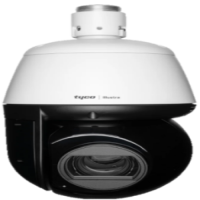
In practice, Tri Viet Controls provides camera solutions and camera management software, with equipment from brands such as Infinova and Tyco – Johnson Controls. This provides a foundation for developing solutions based on the scale, requirements, and integration needs of each facility.
As camera systems expand in terms of the number of devices, locations, and data volume, distributed management will gradually reveal its limitations. A VMS video management system centralizes surveillance, video data management, access permissions, alerts, and video analytics on a unified platform.
For businesses, office buildings, hotels, factories, shopping malls, and urban developments with large-scale security management requirements, choosing the right Video Management System software from the beginning can provide a strong foundation for operation and future expansion.
If your business is looking for a VMS video management system that matches the scale of your facility, existing camera infrastructure, and integration requirements, Tri Viet Controls can provide consultation on a suitable deployment solution for each project.






Please leave your information, we will contact you to complete the order!