Tầng 8, Tòa nhà Sannam, số 78 Phố Duy Tân, P.Dịch Vọng Hậu, Q. Cầu Giấy, Tp. Hà Nội, Việt Nam

Advisory
Direct: 0904565626
Advisory
Direct: 0904565626
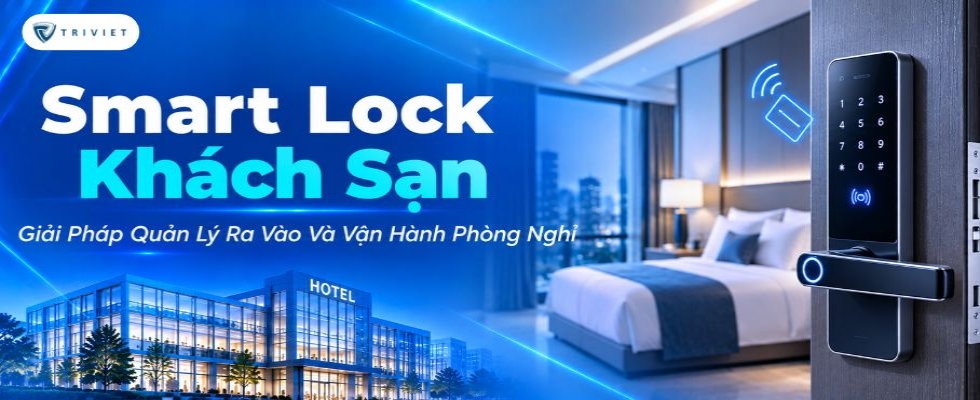
Hotel smart locks help control room access, manage guest key cards, and streamline hotel operations. Learn how to select, integrate, and use them effectively.
In hotel operations, managing room keys and controlling access permissions directly affect security and the guest experience. As the number of rooms and guest stays increases, managing mechanical keys or access cards manually can create additional work for front desk staff.
Hotel smart locks are electronic locking solutions that authenticate users through RFID cards, PIN codes, fingerprints, mobile applications, or other methods depending on the model. When combined with suitable management software, these systems can support access authorization, door activity tracking, and more efficient check-in and check-out procedures.
To select the right solution, hotels should evaluate authentication methods, centralized management capabilities, compatibility with Property Management System (PMS) software, and security requirements. This article explains how hotel smart locks work, their applications, and the key factors to consider when choosing a suitable solution.
Hotel smart locks are electronic locks that use authentication methods such as RFID cards, PIN codes, fingerprints, mobile applications, or facial recognition, depending on the model. Instead of relying solely on mechanical keys, guests can unlock doors using registered or authorized credentials.
In hotels, these devices need to meet two main requirements: providing guests with convenient room access and helping operators control who is authorized to enter. Depending on the solution, access management can be handled directly on the lock, through lock management software, or by connecting the system to hotel management software.
It is important to distinguish between standalone electronic locks and access control systems with centralized management capabilities. A lock that supports card or PIN access does not necessarily support automatic permission assignment based on the length of stay, remote access revocation, or data synchronization with Property Management System (PMS) software. These functions depend on the model, management platform, and integration solution being deployed.
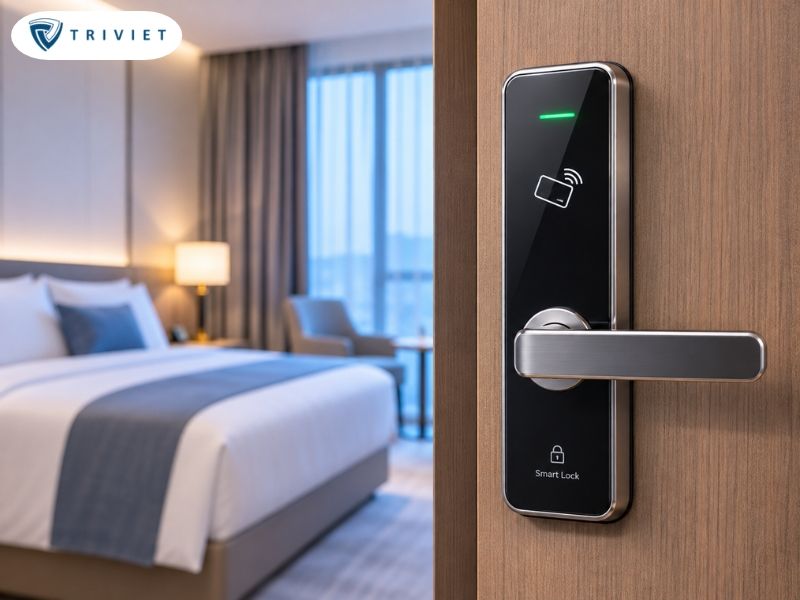
The value of smart locks goes beyond replacing mechanical keys. When integrated with suitable management software, these devices can support multiple stages of guest services and room access control.
In hotels with multiple restricted areas, guest room locks can be considered part of a broader security strategy. Investors should define which doors need to be controlled, the user groups involved, and the required access records. For areas such as secondary entrances, technical rooms, or restricted spaces, integration with an Access Control System can support access permission management across different zones.
Once guests complete the check-in process, front desk staff need to issue the appropriate door access credentials for their assigned rooms. With an RFID card lock system, staff can use an encoding device to write access information to the card according to the system configuration. Other platforms may support PIN code generation or digital key issuance through a mobile application.
If the system is integrated with a PMS, reservation information and stay dates can be used to support the access authorization process. However, the level of automation depends on the connectivity between the PMS, lock management software, and physical devices. With a standalone system, staff still need to grant access permissions through the software or lock management device.
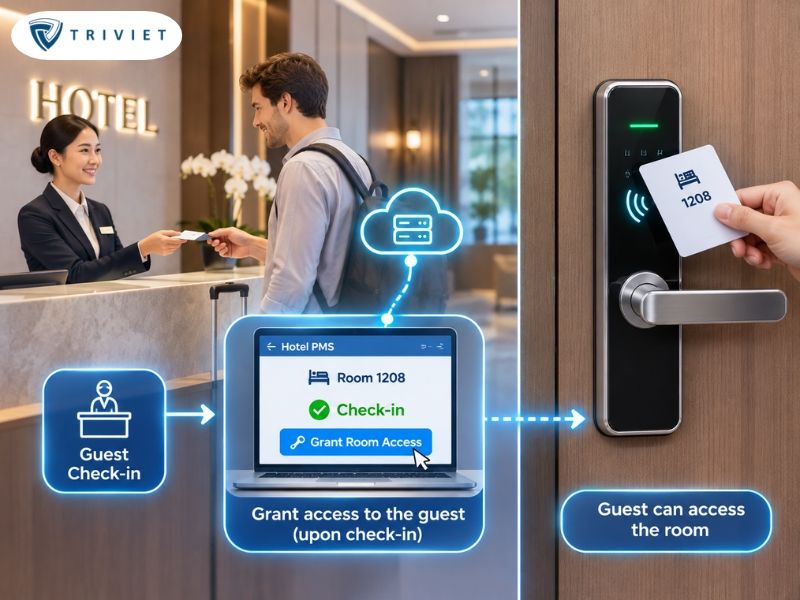
When guests check out, their card or access code permissions need to expire to prevent further use after their stay. In systems that support time-based access management, permissions can automatically expire according to the configured schedule. Some connected solutions also allow staff to update or revoke access permissions through the software.
For locks that do not support time-based access management or have not been integrated with a management platform, access revocation may require direct operation according to the manufacturer's procedures. Therefore, hotels should clearly define how access permissions will be terminated before selecting devices, especially in accommodation models with frequent guest turnover.
In addition to guests, housekeeping, technical, and management staff also need access to specific areas. Lock systems with access authorization features can support the configuration of user groups, permitted doors, and access schedules.
For example, housekeeping staff may only need access to rooms within their assigned work areas, while technical staff may be granted permission to enter areas requiring maintenance. Access permissions should be managed centrally, reviewed periodically, and revoked when employees change roles or leave the organization.
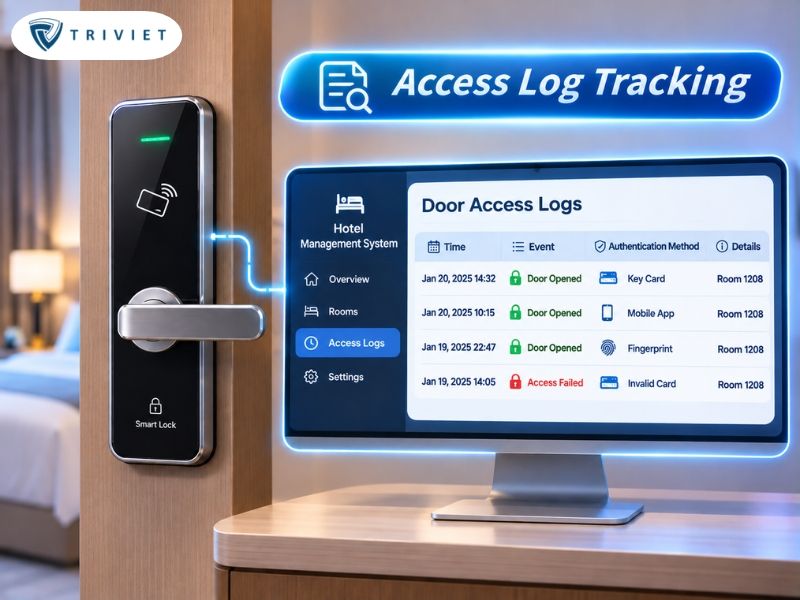
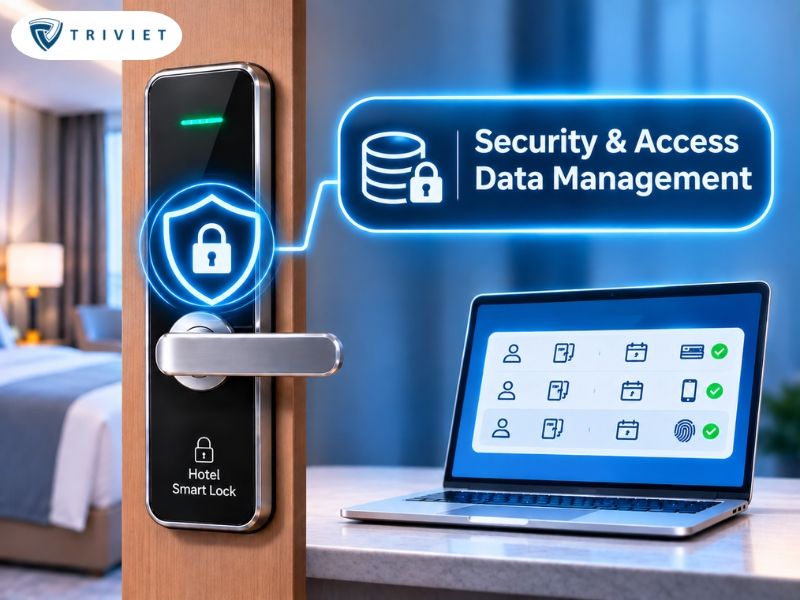
Some lock models and management software can record door opening events, access times, and information related to authentication methods. This data can help management teams investigate incidents or review access activities when necessary.
However, event recording and history retrieval capabilities vary between devices. Before deployment, hotels should check storage capacity, data retention periods, log retrieval methods, and the ability to synchronize records with management software.
Depending on the accommodation model and service procedures, hotels can choose suitable authentication methods. It is not necessary to use every method on the same device. The important consideration is whether the selected method meets guest requirements and the operational needs of the hotel.
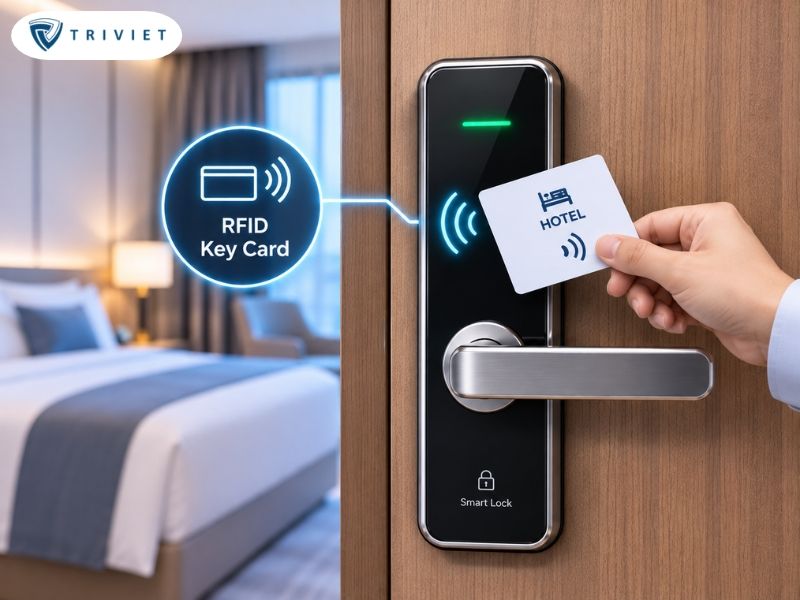
RFID cards are commonly used in hotels because they are simple to operate. Staff can issue cards to guests after confirming their assigned rooms and length of stay. When a guest presents the card to the reader, the lock checks the stored or encoded authentication information to determine whether access should be granted.
This method is easy to explain, suitable for guests who do not want to install an application, and convenient when replacement cards are needed. Hotels should ensure that the cards, locks, and encoding devices are compatible with one another according to the system requirements.
PIN code locks allow users to authenticate by entering a password on a keypad. For models that support temporary or time-limited codes, hotels can issue individual codes to guests for the duration of their stay.
This method is suitable for some serviced apartments, villas, and hotels with flexible check-in procedures. Operators should establish rules for code length, validity periods, code changes, and procedures for handling compromised codes. The ability to generate one-time or scheduled access codes must be verified for each model.
Fingerprint and facial recognition are biometric authentication methods available on some smart lock models. Users register their biometric data in advance and then authenticate directly at the device when unlocking the door.
These methods may be suitable for privately managed rooms, staff-only areas, or specific accommodation models. However, for hotel rooms with frequent guest turnover, hotels need to consider the procedures for registering and deleting biometric data, privacy requirements, and personal data protection. Fingerprint or facial recognition should not automatically be regarded as the most convenient room access management method for every hotel.
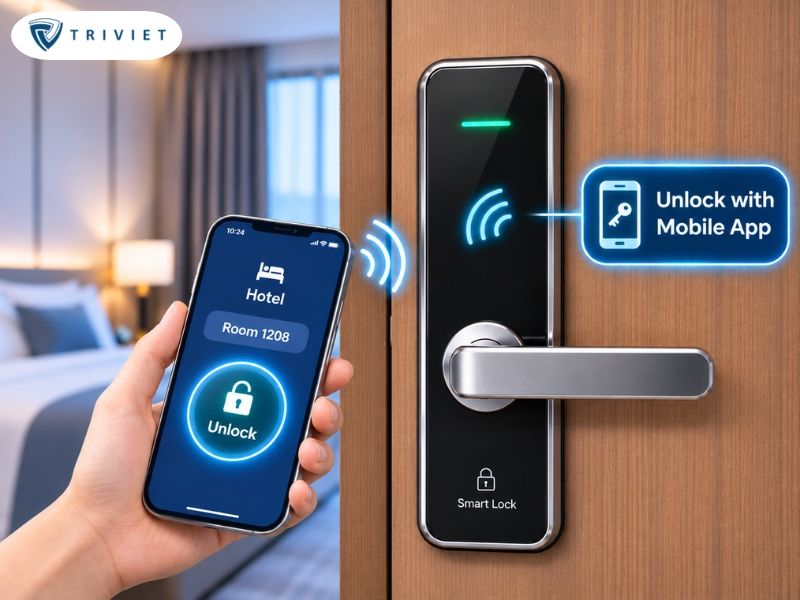
Some smart locks support door unlocking through a mobile application, typically using Bluetooth, Wi-Fi, or a proprietary connectivity platform, depending on the device. This method can reduce the need to hand over physical cards in accommodation models that support digital keys.
Before selecting this option, check the application requirements, user accounts, network connectivity, gateway requirements, and procedures for granting or revoking access. Remote unlocking capability also does not mean that every device can connect directly to a PMS.
To ensure stable system operation, project owners should evaluate devices based on actual operational requirements rather than relying solely on the number of unlocking methods or exterior design.
Hotels need to determine the number of doors requiring access control, the number of cards or user accounts, staff groups, and access permission scopes. For properties with many rooms, prioritize solutions with clear management procedures that make it convenient to grant, modify, or revoke access permissions.
In addition to guest rooms, consider secondary entrances, technical areas, and shared facilities if the project requires access control in these locations. Defining the scope from the beginning helps prevent a situation in which guest room locks operate independently while other areas continue to rely on different management methods.
If a hotel needs to synchronize reservation data and access permissions, it is necessary to check connectivity between the locks, lock management software, and PMS. Key points to clarify include whether the platform supports integration, the connection method, any required intermediate devices, and which operational events can be synchronized.
In particular, verify practical scenarios such as guest check-in, room changes, stay extensions, early check-out, and lost cards. Do not rely solely on the advertised statement "supports connectivity" to conclude that the system can automatically handle the entire process.
Hotels should consider authentication mechanisms, administrator account management, staff access permissions, and the ability to disable access credentials when necessary. For network-connected solutions, account security, data transmission methods, and procedures for handling network interruptions should also be considered.
If the locks store door access history or biometric data, operators need to clearly define what information is collected, who is authorized to access it, and how long it is retained. These factors are important for supporting management activities while minimizing information security risks.
Hotel door locks are used frequently, so they must be suitable for the door type, installation structure, and operating conditions. Project owners should check materials, technical specifications, operating cycles, and maintenance requirements based on the manufacturer's documentation.
For battery-powered locks, consider the battery type, actual operating life under real-world conditions, low-battery alerts, and emergency power options, if available. The operations team should establish a battery inspection and replacement schedule to reduce the risk of a lock running out of power while a guest is staying in the room.
A suitable solution should include clear installation documentation, configuration instructions, and troubleshooting procedures. Hotels should also standardize lock codes, installation locations, and device management information to facilitate inspection and replacement.
If the project is expected to expand, consider whether new locks can be added to the existing platform and how compatible different device versions are with one another. This helps limit additional costs when upgrading the system during operation.
In addition to door access, investors should consider how smart locks work alongside other guest room devices. Depending on the project design, the solution may operate with lighting controls, air conditioning, curtains, and room status management. These functions can form part of a broader Smart Hotel System, helping different operational components work together rather than operate independently.
Tri Viet Controls offers a range of smart locks for apartments, hotels, and villas, with various models supporting different authentication methods. The website currently features products such as F03, G26, G86, GS21, and lock models using the TUYA platform. Features vary between models, so the specifications of each product should be checked before selecting devices for a project.
For example, the F03 product information lists unlocking methods such as cards, fingerprints, and virtual passwords. The G26 and G86 models are introduced with 3D facial recognition, while GS21 supports multiple methods, including facial recognition, fingerprints, PIN codes, RFID cards, mechanical keys, and temporary codes. These details are based on the product descriptions in the catalog and do not mean that every model supports centralized management or PMS integration.
Hotels, serviced apartments, and villas can select locking devices based on their project scale and operational requirements. Tri Viet Controls introduces various smart locks for apartments, hotels, and villas with different authentication methods. Before implementation, investors should review each model's specifications to verify user management, access validity periods, and compatibility with management software.
For hotel projects, device selection should be based on door types, room quantities, preferred authentication methods, and access permission management procedures. If PMS connectivity or centralized lock management is required, the compatibility of the model, software, and connection devices must be confirmed before large-scale deployment.
Trong các dự án khách sạn có yêu cầu tự động hóa phòng, smart lock có thể được xem xét cùng những thiết bị điều khiển và quản lý phòng khác. Chẳng hạn, bộ điều khiển RCU đảm nhiệm việc quản lý các thiết bị điện trong phòng như đèn, điều hòa, rèm cửa và cảm biến theo cấu hình hệ thống. Khả năng kết nối giữa khóa, RCU và nền tảng quản lý cần được xác nhận theo model cũng như phương án kỹ thuật của từng dự án.
Hotel smart locks support guest room access control through electronic authentication methods and can help optimize the process of granting and managing access permissions when integrated with a suitable platform. To choose the right solution, hotels need to evaluate user management capabilities, PMS integration, data security, power supply, and maintenance requirements. Trí Việt Controls can provide consultation on device selection based on the actual scale and technical requirements of each project.







Please leave your information, we will contact you to complete the order!